7 Signs Your Boiler Needs Replacing: When Repair Is Not Enough
Is your boiler on its last legs? Here are 7 clear signs it is time to stop repairing and invest in a new boiler installation.
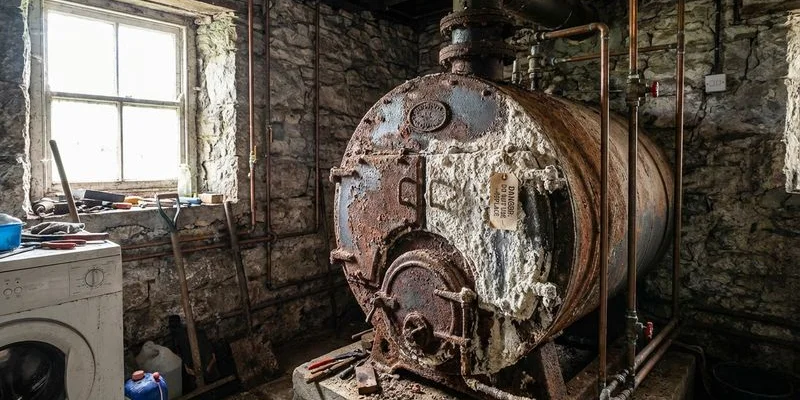
No boiler lasts forever. Even a unit you have maintained perfectly will eventually reach the end of its useful life. We often see homeowners caught in a cycle of expensive repairs that simply delay the inevitable.
It becomes a classic case of false economy. You spend money to fix one part, only for another to fail a month later.
Knowing exactly when to stop repairing and start replacing is a financial decision as much as a practical one. Across County Sligo, our team inspects hundreds of heating systems every year. Some units are still running smoothly after two decades. Others are dangerously inefficient liabilities.
Here are seven clear, data-backed signs that your boiler needs replacing.
1. Your Boiler Is Over 15 Years Old
The typical lifespan of a well-maintained boiler in Ireland varies by fuel type. We generally see 15 to 20 years for oil-fired models and 12 to 15 years for gas boilers.
If your system was installed before 2010, it is effectively operating on borrowed time.
Older boilers lack the condensing technology required by modern efficiency standards. A standard non-condensing boiler from the early 2000s likely operates at 60% to 70% efficiency. This means for every €100 you spend on kerosene or gas, roughly €30 to €40 is wasted heat vanishing up the flue.
In contrast, a new condensing oil boiler from a reputable brand like Grant or Firebird achieves over 95% efficiency.
Quick check: Look at the data plate on your boiler. It is usually located inside the front casing or on the side panel. This plate lists the model, serial number, and often the specific year of manufacture.
2. It Keeps Breaking Down
If you are on first-name terms with your heating engineer because of repeated call-outs, you need to look at the numbers. While occasional maintenance is standard, a pattern of failure indicates a dying system.
We advise homeowners to apply the “50% Rule” to this decision.
If the cost of a quoted repair approaches 50% of the value of a new boiler, or if you have spent that amount cumulatively over the last two years, stop spending. You are throwing good money after bad.
Common recurring faults in ageing boilers include:
- Failing PCB (Printed Circuit Board): Replacement often exceeds €350.
- Cracked heat exchangers: A major repair that can cost over €500.
- Corroded burner components: leading to inefficient fuel use.
- Faulty thermostats: causing the boiler to cycle on and off rapidly.
- Leaking seals: which can cause internal rust and electrical shorts.
Each repair might seem justifiable in isolation. However, the cumulative cost over 24 months often exceeds the deposit on a modern, warrantied installation.
3. Your Heating Bills Are Rising Unexpectedly
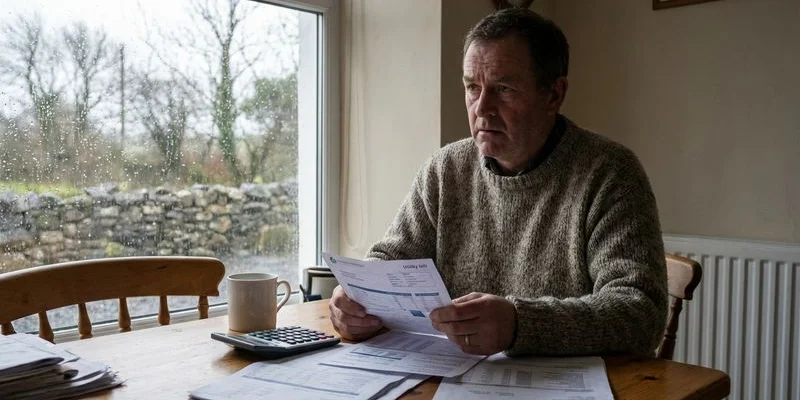
If your heating bills have been creeping upward despite no change in your daily usage, your boiler’s efficiency is likely crashing. As components wear out and heat exchangers scale up with mineral deposits, the system must burn more fuel to generate the same heat output.
This is critical financial context for 2026.
The Irish Government’s scheduled Carbon Tax increase for home heating fuels takes effect on May 1, 2026. This hike continues the trajectory toward €100 per tonne by 2030. In Sligo’s damp climate, where heating can account for 60-70% of a home’s total energy use, running an inefficient G-rated boiler against rising tax rates is a financial double-whammy.
4. The Boiler Makes Unusual Noises
All boilers make a low hum during operation. However, specific, loud sounds indicate terminal internal failure that a simple service cannot fix.
- Kettling (Banging): This loud banging noise is caused by limescale build-up on the heat exchanger. Sligo has pockets of hard water, particularly around Riverstown (approx. 320 mg/L hardness) and areas with limestone bedrock. This mineral deposit restricts water flow, causing water to boil and expand violently inside the heat exchanger.
- Whistling: This frequently indicates a failing pump bearings or air trapped in the system.
- Grinding or Clunking: These mechanical sounds suggest the fan or motor is physically breaking apart.
- Explosive Ignition: A loud “whoosh” or rumble when the boiler fires up indicates a dangerous delay in ignition.
If these noises persist despite a professional power flush, the internal damage is likely permanent. We often recommend installing a magnetic filter, like an Adey MagnaClean, with a new boiler to prevent this issue from recurring.
5. Radiators Take a Long Time to Heat Up
If your radiators take significantly longer to reach temperature than they used to, you are likely dealing with a circulation issue typical of end-of-life systems.
This sluggish performance usually points to a buildup of magnetite sludge. This thick, black goo creates cold spots at the bottom of radiators and forces your pump to work overtime, reducing overall system efficiency by up to 15%.
- Reduced boiler output due to a clogged main heat exchanger.
- Sludge blockages restricting flow to specific zones.
- Failing pump unable to push water through the resistance.
While a power flush (costing roughly €500-€700) can clear the pipes, it cannot fix a boiler that has already been damaged by years of sludge circulation.
6. There Are Visible Signs of Deterioration
Take a close look at the physical condition of your unit. Visible external degradation is often just the tip of the iceberg for internal rot.
- Rust on the casing: Indicates long-term moisture exposure and likely internal corrosion.
- Water stains on the floor: Suggests failing internal seals or a cracked heat exchanger.
- Soot marks: Black staining around the burner or flue indicates poor combustion.
- Yellow flame (Gas): A healthy gas flame must be crisp and blue. A yellow, floppy flame indicates incomplete combustion.
Safety Warning: A yellow flame or soot marks can indicate the production of Carbon Monoxide (CO). According to the Health and Safety Authority (HSA), CO is a silent killer. If you see these signs, turn the unit off immediately and call a Registered Gas Installer (RGI) or OFTEC technician.
7. Replacement Parts Are Hard to Find
As boilers age, manufacturers discontinue production of specific components. If your heating engineer tells you that a fan or gas valve is “obsolete,” you are in a difficult position.
We regularly encounter this issue with older Riello RDB, Stanley, and Firebird models across County Sligo.
While these brands are excellent, parts for units manufactured 15-20 years ago are rarely stocked by local merchants. You might find a “refurbished” part online, but that is a gamble.
Searching for used parts on eBay is risky. You could be waiting days for a component that fails within a week, leaving your home freezing during a Sligo winter.
The Benefits of a New Boiler
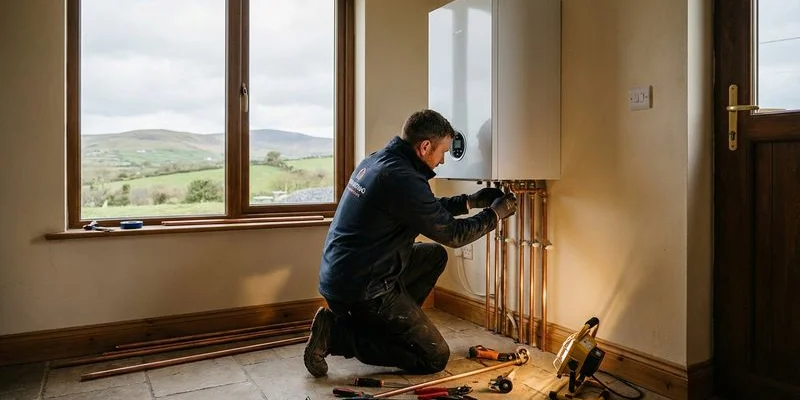
Investing in a new boiler is not just about fixing current problems. It brings significant long-term advantages that you will notice on your monthly bank statement.
Improved Efficiency
Modern condensing boilers capture heat from exhaust gases that old boilers simply waste. Replacing a G-rated boiler with an A-rated model can save you between €200 and €400 per year on fuel bills.
Better Reliability and Warranty
A new boiler comes with a manufacturer’s warranty, typically ranging from 5 to 10 years depending on the brand (e.g., Worcester Bosch or Grant). This warranty offers total peace of mind that you will not face unexpected repair bills.
Smart Control Integration
Newer units are compatible with smart thermostats like Nest, Hive, or EPH Ember. These allow you to control heating from your phone, ensuring you never heat an empty home.
Enhanced Safety
New units feature advanced safety protocols. These include improved combustion monitoring, automatic flame failure detection, and built-in frost protection to prevent pipe bursts during cold snaps.
Improved BER Rating
Replacing an old boiler with a modern condensing unit can improve your home’s Building Energy Rating (BER) by one or two grades. This adds tangible resale value to your property in the current Irish housing market.
How Much Does a New Boiler Cost in Sligo?
As of early 2026, installation prices have adjusted to reflect material costs, skilled labor rates, and new efficiency standards.
| System Type | Estimated Cost (Fully Installed) |
|---|---|
| Gas Condensing Boiler | €2,685 - €3,950 |
| Oil Condensing Boiler | €3,000 - €4,800 |
| System Boiler with Cylinder | €3,500 - €5,500 |
These costs generally include the boiler, installation labour, copper pipework, system flushing, and disposal of the old unit.
Note on Grants: While the SEAI no longer offers grants for fossil fuel boiler replacements, you can still apply for the Heating Controls Grant. This provides up to €700 to upgrade your timers and thermostats. We highly recommend doing this upgrade alongside a boiler install to maximize efficiency.
Ready to Replace Your Boiler?
If your boiler is showing two or more of these seven signs, it is time to start planning a replacement. Do not wait for a complete breakdown during the coldest week of the year.
A planned replacement is always less stressful and gives you the time to choose the exact model that fits your needs.
At Emergency Plumber Sligo, we supply and install high-quality oil and gas boilers across County Sligo. We will assess your current system, recommend the best replacement option for your home, and carry out a professional installation with minimal disruption.
Call us on 087 341 0745 for a free, no-obligation consultation on your boiler replacement options.
Need a Plumber in Sligo?
Our team is available 24/7 for emergency and scheduled plumbing services across County Sligo.