DIY Plumbing vs Hiring a Professional: When to Call a Plumber in Sligo
Some plumbing jobs you can handle yourself, others need a pro. Learn which tasks require a qualified plumber and which are safe to DIY.
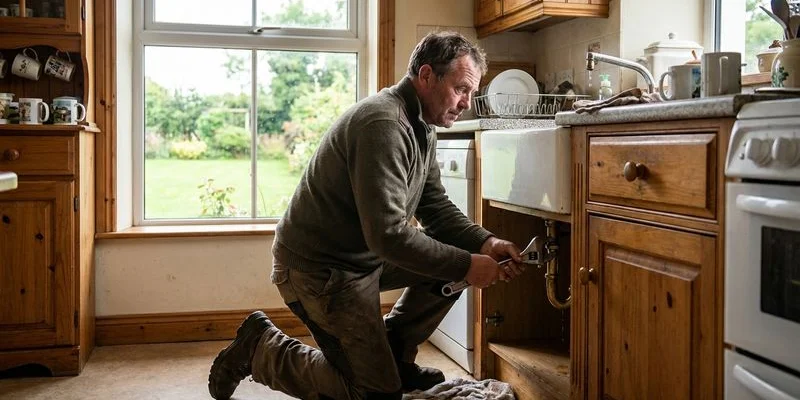
You know the feeling well.
You spot a leak under the sink, grab a wrench, and figure it is a five-minute fix.
We see this exact scenario play out in homes across Sligo every single week.
Internet tutorials make everything look incredibly easy.
The reality of plumbing systems in older Irish homes is often far more complicated.
There are certainly minor maintenance tasks you can handle perfectly well on your own.
We encourage homeowners to tackle these simple fixes to save money and learn about their property.
However, a specific boundary exists where a quick DIY attempt turns into a significant repair bill.
Our team has attended too many properties where a stripped thread or a crushed pipe caused thousands of euro in damage, requiring an emergency plumber to fix the original problem plus the DIY mistake.
Knowing when to put the tools down is just as important as knowing how to use them.
Jobs You Can Safely DIY
There are several plumbing tasks that most homeowners can handle with basic tools and a bit of patience.
We find that the following jobs rarely lead to disaster if you follow the correct steps.
Replacing a Tap Washer or Cartridge
A dripping tap is a nuisance that wastes water and increases your metered charges if you are a business.
We often see older taps in Sligo homes that simply need a new rubber washer to stop the leak.
Modern mixer taps likely use a ceramic disc cartridge rather than a traditional washer.
You will need an adjustable spanner, a flat-head screwdriver, and the correct replacement part.
Pro Tip: Before you buy a replacement, take the old washer or cartridge to a local supplier like Brooks or Homeland. Sizes vary by mere millimeters (often 1/2 inch vs 3/4 inch), and guessing often leads to a second trip.
Always turn off the water supply first at the isolation valve under the sink or the mains stopcock before dismantling the tap.
Unblocking a Sink or Basin
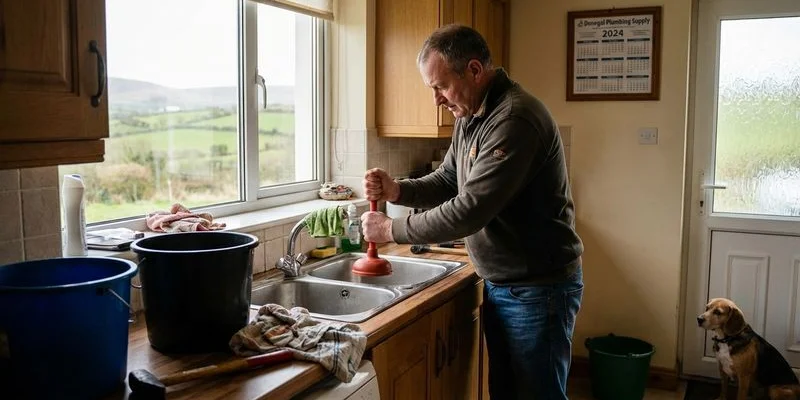
If a single sink or basin is draining slowly, the blockage is likely local and clearable.
We recommend trying a plunger before pouring chemicals down the drain.
Harsh chemical cleaners generate heat via an exothermic reaction that can warp the plastic pipework found in many Celtic Tiger-era builds.
If the plunger fails, place a bucket under the U-bend (trap), unscrew it by hand, and clean it out manually.
Replacing a Toilet Seat
This task is purely mechanical and carries zero risk of water damage.
We suggest checking whether your toilet requires top-fixing or bottom-fixing hinges before buying a new seat.
Unscrew the old seat, fit the new one, and tighten the bolts with a spanner or screwdriver.
Bleeding a Radiator
Trapped air in your heating system prevents radiators from heating fully at the top.
We know winter in the northwest can be unforgiving, so efficient heating is vital for comfort and cost savings.
If a radiator is cold at the top but hot at the bottom, grab a radiator key.
These keys cost about two euro at any local hardware shop in town.
Open the bleed valve slightly until you hear a hiss, then close it the moment water appears.
Crucial Step: Check your boiler pressure gauge afterward. If it has dropped below 1.0 bar, you will need to use the filling loop to top it back up to the standard 1.2-1.5 bar range.
Replacing a Shower Head
Limescale buildup is common in Sligo Town where the water is harder, clogging shower heads over time.
We advise soaking your old shower head in white vinegar overnight before buying a new one.
If replacement is necessary, most heads simply unscrew from the hose.
Wrap a small amount of PTFE tape (plumber’s tape) around the threads to ensure a watertight seal, then hand-tighten the new unit.
Jobs That Need a Professional Plumber
Certain tasks involve risks that go far beyond a wet floor.
We strictly advise against DIY attempts on the following systems due to safety concerns and Irish legal regulations.
Gas and Oil Boiler Services
This is the most critical distinction in our industry.
In Ireland, it is a criminal offense for anyone other than a Registered Gas Installer (RGI) to carry out gas boiler work.
We ensure all our gas work complies strictly with I.S. 813 domestic gas installation standards.
Penalties for illegal gas work can include fines up to €15,000 or even imprisonment under the Energy (Miscellaneous Provisions) Act 2006.
Similarly, oil boiler maintenance requires an OFTEC-registered technician to ensure efficiency and safety.
Carbon monoxide is a silent killer, and a botched repair on a flue or burner is a life-threatening gamble.
Insurance policies also universally exclude coverage for fire or explosion if the system was not maintained by a certified professional.
Mains Water Supply Work
The pipework connecting the boundary stopcock to your internal plumbing is under high pressure, often exceeding 3 bar.
We have seen DIY repairs on mains pipes fail catastrophically, flooding ground floors in minutes.
If you damage the rising main, you may not be able to shut off the water without a special “crutch key” for the external street valve.
Central Heating System Modifications
Adding a radiator or moving a boiler involves complex flow rate calculations and pipe sizing.
Our team often fixes “cold spots” in homes where a DIY radiator installation unbalanced the entire system.
Mixing copper and plastic pipework incorrectly can also lead to noisy systems or oxygen ingress, which corrodes your boiler from the inside out.
Bathroom and Kitchen Installations
Fitting a new suite looks like a cosmetic job, but the hidden plumbing is complex.
We focus heavily on correct waste pipe gradients (fall) and watertight seals during installation.
A slow leak under a shower tray or behind a kitchen cabinet can rot timber joists for months before you notice a damp patch on the ceiling below.
Sligo’s humid Atlantic climate accelerates rot, making watertight “tanking” (waterproofing) behind tiles essential.
Deep Drainage and Sewer Work
Blocked main drains or collapsed sewer pipes require industrial-grade equipment.
We use CCTV cameras and high-pressure jetters to locate and clear blockages without digging up your garden.
Many rural properties in County Sligo rely on septic tanks, which are subject to strict environmental regulations regarding groundwater protection.
Comparison: DIY vs. Professional Risk Profile
| Task | Risk Level | Potential Consequence | Professional Required? |
|---|---|---|---|
| Changing a washer | Low | Dripping tap | No |
| Bleeding radiators | Low | Boiler pressure drop | No |
| Gas Boiler Repair | Critical | Carbon Monoxide / Explosion | YES (Legal Requirement) |
| Moving Radiators | High | System imbalance / Leaks | YES |
| Mains Pipework | High | Uncontrollable flooding | YES |
Any Work You Are Not Confident About
Trust your instincts if a job feels out of your depth.
We regularly receive calls from customers who dismantled a unit and could not put it back together.
Calling a professional immediately is often cheaper than calling one to fix a failed attempt.
The Hidden Costs of DIY Gone Wrong
The sticker price of a professional plumber is visible, but the cost of a bad repair is often hidden.
We have compiled data on the real financial impact of DIY errors.
- Water Damage Restoration: A significant escape of water can cost upwards of €4,000 to dry out and repair flooring and plaster.
- Voided Insurance: Most Irish home insurance policies require you to take “reasonable care” of the property; unqualified work violates this clause.
- Building Regulations: Breaching regulations (Part H for drainage or Part J for heat producing appliances) can stall the future sale of your home.
- Health Hazards: Sewer gas leaks or contaminated water supplies pose immediate health risks to your family.
A Real Example
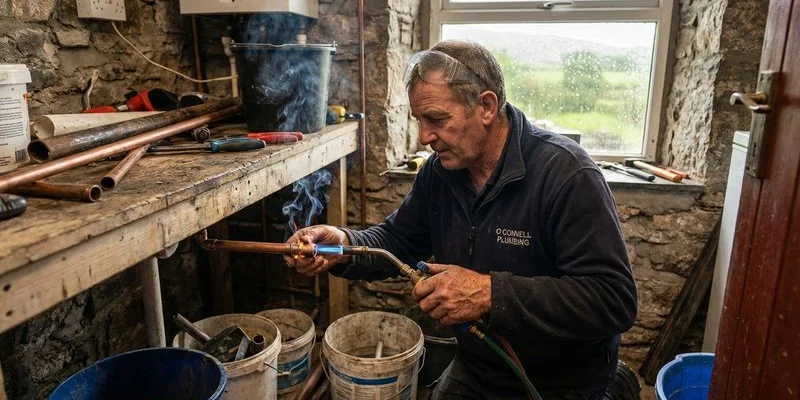
We attended a property near Collooney last winter where a homeowner tried to extend a copper pipe in the airing cupboard.
The soldered joint appeared solid on the surface.
However, the pipe was not cleaned or fluxed correctly, preventing the solder from bonding inside the joint via capillary action.
A pinhole leak developed three weeks later.
By the time the homeowner noticed the smell of damp, the water had saturated the floorboards and the ceiling of the room below.
The repair bill for the building work was five times the cost of the original plumbing job.
How to Choose a Good Plumber in Sligo
Finding a reliable tradesperson ensures peace of mind and quality work.
We recommend checking these five criteria before hiring anyone:
- Verify Qualifications: Demand to see an RGI ID card for gas or OFTEC registration for oil. You can verify their number on the RGII website.
- Check Insurance: Ensure they hold current public liability insurance to cover any accidental damage to your property.
- Get a Written Quote: Avoid surprises by agreeing on a price or a clear hourly rate before work starts.
- Look for Local Experience: Sligo has specific challenges, from the limestone-heavy water in the town to the pressure fluctuations in rural schemes.
- Read Reviews: Look for recent feedback from customers in your area on Google or social media.
A local plumber understands the quirks of our housing stock, such as the location of stopcocks in 1970s bungalows or the piping materials used in Celtic Tiger-era estates.
The Bottom Line
A clear line exists between maintenance and specialist work.
We encourage you to handle the small stuff like washers and unblocking sinks.
Those tasks save you money and keep your home running smoothly.
But for gas, mains water, heating modifications, or drainage, the risk is simply not worth the reward.
If you are facing a plumbing problem in County Sligo and are unsure of the best approach, give Emergency Plumber Sligo a ring.
We provide honest advice over the phone to help you decide if a call-out is necessary.
Call us on 087 341 0745 for advice or to book a professional service.
Need a Plumber in Sligo?
Our team is available 24/7 for emergency and scheduled plumbing services across County Sligo.