Hot Water Cylinder Guide: Everything Irish Homeowners Need to Know
Not sure whether to repair or replace your hot water cylinder? This guide covers types, signs of failure, and what to expect from a replacement.
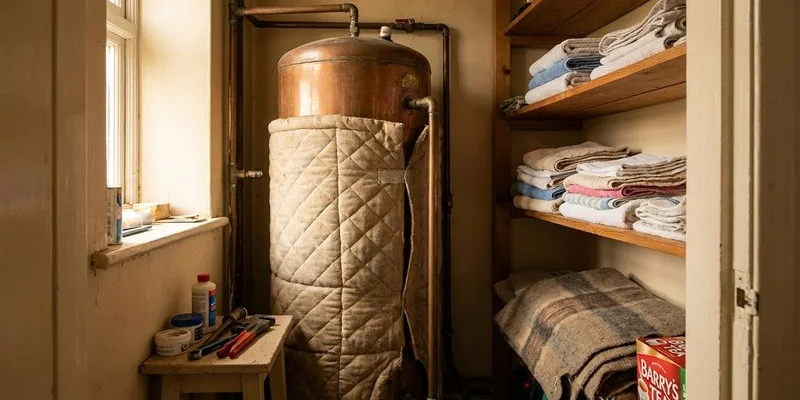
The hot water cylinder is the silent workhorse of the Irish home. We often find that homeowners in Sligo only notice this essential component when the shower runs cold or a damp patch appears on the ceiling.
It stores the water used for baths, washing up, and heating, yet it remains largely ignored until a failure occurs.
Our team has seen firsthand how a little knowledge can save you thousands in emergency repairs and energy bills. From what we’ve observed in local properties, catching a leak early or choosing the right insulation grade makes a massive difference.
This guide breaks down exactly what you need to know about your system. We will cover identifying the right replacement and understanding the real costs involved in 2026.
Types of Hot Water Cylinder
Vented (gravity-fed) cylinders
This remains the most common type in Irish homes, particularly in properties built before 2010. A vented cylinder relies on gravity and a cold water storage tank located in the attic to generate pressure.
We encounter these frequently in established Sligo neighborhoods like Strandhill or Rosses Point where the plumbing infrastructure hasn’t been modernized.
Gravity pushes cold water down into the bottom of the cylinder. Here, it is heated by an internal coil connected to the boiler or an electric immersion heater.
Key features:
- Source: Fed by a cold water tank (usually 225 litres) in the attic.
- Venting: An open vent pipe runs from the top of the cylinder back to the attic tank.
- Pressure: Hot water pressure depends entirely on the height difference between the attic tank and the taps (1 meter drop equals approx 0.1 bar).
- Safety: Safe design with no risk of dangerous pressure build-up.
- Cost: The most affordable type to purchase and install.
The main drawback here is the limited pressure. You might struggle to get a powerful shower in a bungalow because the tank isn’t high enough. That is why we frequently install shower pumps, such as those from Stuart Turner or Grundfos, alongside these cylinders to boost performance.
Unvented (pressurised) cylinders
Unvented cylinders connect directly to the mains water supply to deliver hot water at high pressure. There is no need for a cold water tank in the attic.
This system provides a hotel-quality shower experience at every outlet in the house.
Key features:
- Source: Fed directly from the mains supply.
- Performance: Delivers hot water at mains pressure (typically 2 to 3 bar).
- Space Saving: No attic tank required, which frees up valuable storage space.
- Safety Tech: Includes multiple safety devices like expansion vessels and pressure relief valves.
- Regulation: Must be installed by a qualified installer with specific certification for unvented systems.
- Maintenance: Annual service is highly recommended to check safety valves.
We are seeing a massive shift toward unvented systems in renovations across Ireland. Brands like Joule (specifically the Cyclone range) and Kingspan are popular choices here due to their reliability. They offer superior performance and are often made from high-grade Duplex stainless steel.
However, the installation is more complex. It requires specific safety certifications due to the high pressure involved.
Direct vs indirect cylinders
You also need to know how the water actually gets hot.
| Cylinder Type | Heating Source | Typical Application |
|---|---|---|
| Indirect | Coil connected to Gas/Oil Boiler | Standard homes with central heating |
| Direct | Electric Immersion Elements only | Apartments or homes without gas |
| Twin Coil | Boiler + Renewable Source | Homes with Solar Thermal or Heat Pumps |
Most homes in County Sligo utilize indirect cylinders heated primarily by the boiler. The immersion heater acts purely as a backup for summer use or boiler failures.
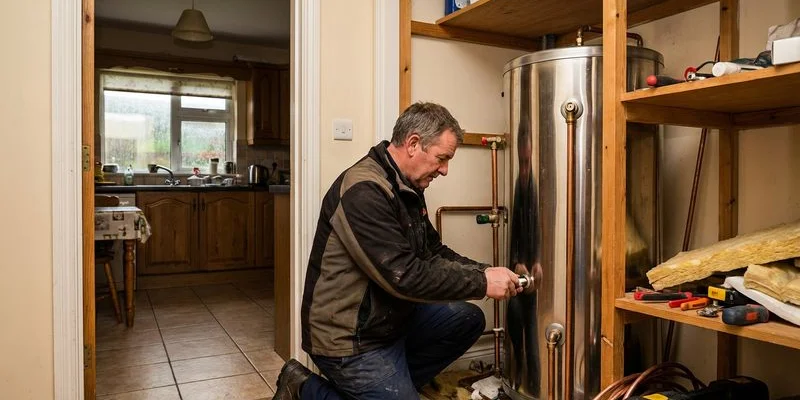
Signs Your Hot Water Cylinder Needs Replacing
Hot water cylinders generally last 20 to 25 years for copper and roughly 30 years for stainless steel. But we advise customers not to rely solely on age.
Several specific signs indicate a replacement is needed immediately.
Discoloured hot water
If your hot water runs brown, orange, or rusty, the interior of the cylinder is likely corroding. A small amount of discolouration after a holiday is normal. Persistent rusty water indicates the metal is breaking down and failure is imminent.
Leaking from the cylinder
Any visible leak from the cylinder body means the unit has developed a pinhole or crack. We cannot repair these leaks reliably.
The constant heating and cooling cycles will cause the patch to fail. A small weep today will eventually burst. This causes significant water damage to floors and ceilings below.
Not enough hot water
If you run out of hot water faster than before, you likely have an issue with capacity or heat transfer. Limescale build-up on the coil can act as an insulator. This prevents the water from heating up fully.
In hard water areas, this scale reduces the volume of water the tank can hold. A layer of limescale just 1.6mm thick can cause a heat efficiency loss of up to 12%.
Unusual noises
Banging, rumbling, or popping sounds during heating usually point to limescale deposits (kettling). The scale traps water against the heating element. It causes the water to boil into steam and collapse with a loud bang.
This reduces efficiency and increases your energy bills.
The cylinder is very old
If your copper cylinder is approaching 25 years old, it is living on borrowed time. We have seen many “fine” cylinders burst unexpectedly due to metal fatigue. Proactive replacement allows you to choose a time that suits you rather than dealing with a flooded landing at 2 AM.
Rising electricity bills from the immersion
If your immersion heater runs constantly but produces lukewarm water, the element is likely scaled up or failing. You can replace just the element. However, if the cylinder itself is old, replacing the entire unit is often more cost-effective in the long run.
Choosing a Replacement Cylinder
Selecting the right cylinder involves more than just swapping like for like. We help homeowners verify their usage needs to ensure they don’t overspend on heating unused water.
Size
The cylinder size must match your household’s actual demand.
| Household Size | Recommended Cylinder Size | Typical Bath/Shower Usage |
|---|---|---|
| 1-2 people | 120-150 litres | 1 bath + 1 shower / day |
| 3-4 people | 150-210 litres | 1 bath + 3 showers / day |
| 4-5 people | 210-250 litres | 2 baths + 3 showers / day |
| 5+ people | 250-300+ litres | High demand / multiple bathrooms |
Consider your peak times. If three people shower between 7 AM and 8 AM, you need a larger capacity or a cylinder with a rapid recovery coil. These specialized coils can reheat a full tank in as little as 20 to 30 minutes.
Material
- Copper: The traditional choice. It is bacteriostatic (kills bacteria) and an excellent heat conductor. It is, however, soft and prone to denting or corrosion if the water chemistry is aggressive.
- Stainless Steel: The modern standard. We install high-grade Duplex stainless steel cylinders because they are incredibly strong and resist corrosion. They often come with 25-year manufacturer warranties compared to the standard 1-year guarantee on some copper units.
Insulation and Efficiency
Old copper cylinders were often covered with a loose red jacket. Modern cylinders come with factory-fitted polyurethane foam insulation.
This “spray foam” layer is incredibly efficient.
A modern, factory-insulated cylinder loses only about 1-2 degrees of heat over 24 hours (approx 1.5 kWh/24hrs standing loss). In contrast, an old cylinder with a loose jacket can lose up to 15 degrees. Upgrading to a modern cylinder can save you significant money on reheat times.
If you have a cylinder in good condition but with poor insulation, fitting a proper 80mm cylinder jacket is essential. A jacket costs around EUR 25 and can save over EUR 100 per year in wasted energy.
The Immersion Heater
Almost every hot water cylinder in Ireland has an immersion heater. This electric heating element sits inside the cylinder and acts as a backup.
We see homeowners use it in three main scenarios:
- During summer when the central heating boiler is turned off.
- When the main boiler breaks down.
- To “boost” the water temperature for a large bath.
Immersion heater tips
- Use a timer: Never leave the immersion on 24/7. A standard 3kW immersion costs roughly EUR 1.00 to EUR 1.20 per hour to run at current rates (averaging €0.35-€0.40 per kWh).
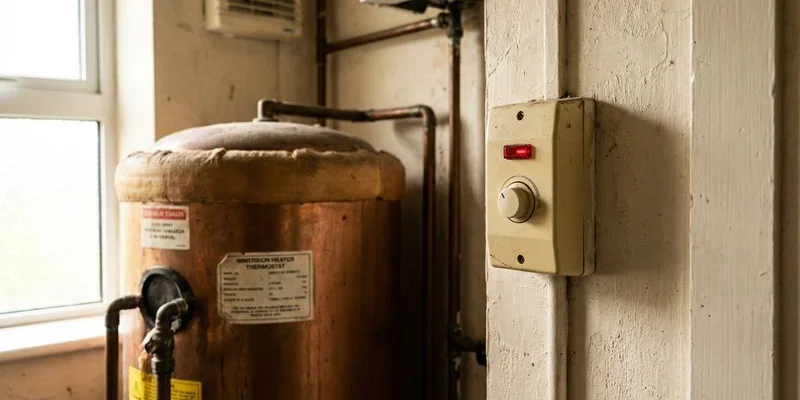
- Thermostat setting: The immersion thermostat should sit between 60 and 65 degrees Celsius. This temperature kills Legionella bacteria but prevents scalding and excessive energy waste.
- Smart Controls: Consider installing a WiFi-enabled timer like those from EPH Controls or Nest. These allow you to turn the hot water on from your phone 30 minutes before you get home.
Hot Water Cylinder Replacement Costs
Pricing varies based on the complexity of the job and the pipework changes required. We have compiled these estimates based on typical installations in County Sligo for 2026.
| Component | Approximate Cost (Supply & Fit) |
|---|---|
| Vented copper cylinder (Standard) | EUR 450 - EUR 750 |
| Vented stainless steel cylinder | EUR 550 - EUR 950 |
| Unvented (Pressurised) cylinder | EUR 1,300 - EUR 2,600 |
| Immersion heater replacement only | EUR 90 - EUR 160 |
| Cylinder jacket (Material only) | EUR 20 - EUR 35 |
The jump in price for unvented cylinders reflects the additional safety valves, expansion vessels, and the discharge pipework required by law.
Maintaining Your Hot Water Cylinder
Regular checks keep your system safe and efficient. We recommend a few simple steps to prolong the life of your unit.
- Check the temperature: Ensure the stored water stays at 60 degrees Celsius to prevent bacterial growth.
- Annual visual inspection: Look for green crusting or white stains around connections. These indicate slow leaks.
- Test the pressure relief valve: For unvented cylinders, you must lift the valve lever annually to ensure water flows and stops correctly.
- Check the expansion vessel: Unvented systems rely on an air bubble in an expansion vessel. This needs recharging by a pro every few years.
- Insulate properly: Ensure no gaps exist in the insulation where heat can escape.
Ready for a Replacement?
If your cylinder shows signs of rust or you are tired of weak shower pressure, do not wait for a flood. A planned upgrade puts you in control of the budget and the timing.
At Emergency Plumber Sligo, we specialize in supplying and installing high-efficiency vented and unvented cylinders. Our team assesses your specific plumbing setup to recommend the most reliable solution for your home.
Call us on 087 341 0745 to discuss your hot water cylinder options.
Need a Plumber in Sligo?
Our team is available 24/7 for emergency and scheduled plumbing services across County Sligo.