How Often Should You Service Your Boiler? A Guide for Irish Homeowners
Annual boiler servicing is recommended, but why does it matter? Learn the benefits of regular boiler maintenance and when to book yours.
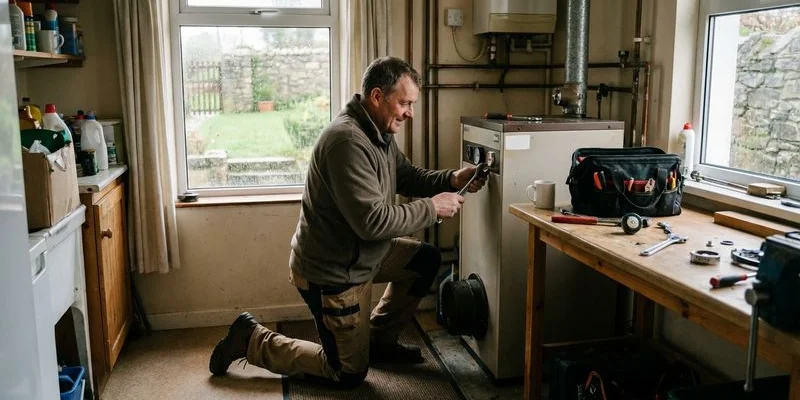
To keep your home warm and safe, regular boiler maintenance is non-negotiable.
We know how easy it is to push this task to the bottom of the to-do list until a cold snap hits.
From what we’ve seen servicing homes across Sligo, that delay is often the difference between a simple tune-up and a costly emergency repair.
Let’s look at the best timing for your service, the specific checks you should expect, and the actual cost of skipping them.
The Short Answer: Once a Year
We cannot stress this enough: you must service your boiler annually.
Every major manufacturer, including popular Irish brands like Grant, Firebird, and Worcester Bosch, requires a twelve-month service cycle to keep their warranties valid.
Our team recommends scheduling this in late summer or early autumn (August to October).
This timing allows us to catch worn parts before the heavy lifting of the heating season begins. Taking this proactive approach is essential to learn how to prevent boiler breakdown this winter.
Waiting until the first frost of November usually means joining a long waiting list when heating engineers are at their busiest.
Why Annual Servicing Matters
1. Safety and Carbon Monoxide Prevention
We treat safety as the absolute priority in every service call.
A faulty boiler can release carbon monoxide (CO), an odourless and colourless gas that is fatal in high concentrations.
According to the Health and Safety Authority (HSA), carbon monoxide poisoning kills on average six people in Ireland every year.
The only way to detect a leak is with a specialized flue gas analyser, which we use to ensure exhaust fumes are venting safely outside.
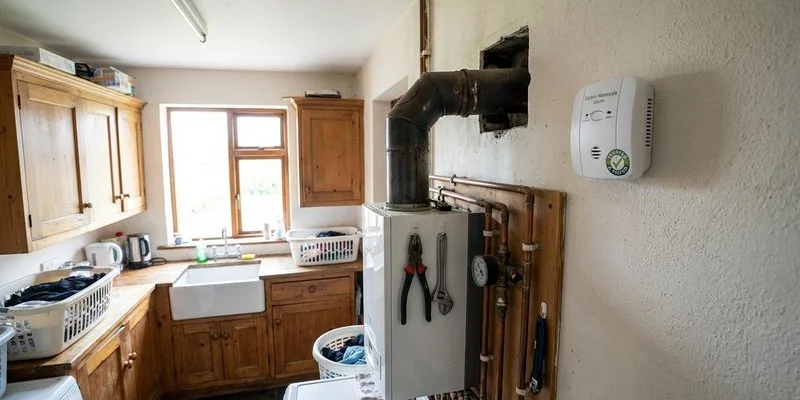
Insider Tip: Check your carbon monoxide alarm today to ensure it meets the EN 50291 standard.
These units have a limited lifespan (usually 7-10 years), and we often find expired alarms in homes that owners assumed were still working.
2. Efficiency and Fuel Savings
We frequently see oil boilers in rural Sligo running with a thick layer of soot inside the heat exchanger.
Industry data suggests that just 1mm of soot buildup can reduce efficiency by up to 10%.
That layer acts as an insulator, stopping heat from transferring to your water and sending your money straight up the flue.
For an average detached home using 2,000 litres of oil, a 10% efficiency drop could waste EUR 200+ per year at current fuel prices.
3. Reliability and Prevention
Our engineers find that 70% of breakdowns could have been prevented with a standard service.
Small issues, like a worn capacitor or a dripping seal, are cheap to fix if caught early.
Ignoring these minor faults often leads to a “catastrophic failure” where the boiler locks out completely, usually on the coldest night of the year.
4. Insurance and Warranty Compliance
We often speak to homeowners who are shocked to learn their insurance claim for water damage was rejected.
Many Irish home insurance policies contain a “reasonable care” clause.
If a pipe bursts because your boiler failed due to lack of maintenance, the insurer may argue you failed to take reasonable care of the system.
Keeping your service record proves you did your due diligence.
What Happens During a Boiler Service?
We follow a strict protocol depending on your fuel type to ensure nothing is missed.
For Oil Boilers (Common in Sligo)
Oil systems require more physical cleaning due to the nature of the fuel.
- Nozzle Replacement: We swap the jet nozzle every single year as they wear down and alter the spray pattern.
- Filter Change: Replacing the oil line filter prevents sludge from reaching the burner.
- Soot Removal: We brush and vacuum the baffles and heat exchanger.
- Fire Valve Check: Testing this safety device ensures the oil supply cuts off in a fire.
- Tank Inspection: We check your external tank for water contamination or cracks.
- Flue Gas Analysis: A digital printout confirms the boiler is burning cleanly.
For Gas Boilers
Gas systems are cleaner but require precise safety testing under IS 813 (Irish Standard).
- Gas Tightness Test: We verify there are absolutely no leaks in the pipework.
- Burner Pressure Check: Ensuring the gas pressure matches the manufacturer’s rating.
- Condensate Trap: Cleaning this prevents backups that can cause the boiler to seize.
- Safety Device Testing: We physically test the overheat stat and flame failure device.
- Ventilation Check: Ensuring the boiler has enough air to burn safely.
Insider Tip: Always ask your engineer for the combustion analysis printout.
This little slip of paper is your boiler’s “blood test” results, proving exactly how efficient and safe the burn is at that moment.
How Much Does a Boiler Service Cost?
We believe in transparency when it comes to pricing.
In 2026, a professional boiler service in County Sligo generally costs between EUR 90 and EUR 160.
Oil boilers typically sit at the higher end of this range (EUR 110-160) because the nozzle and flexible oil lines are physical parts that must be replaced.
Gas boilers are often slightly cheaper (EUR 90-140) as they have fewer consumable parts.
Cost Comparison: Planned vs. Reactive
The table below shows why proactive maintenance pays off.
| Expense Type | Estimated Cost | Notes |
|---|---|---|
| Annual Service | EUR 90 - EUR 160 | Includes labour, standard parts (nozzle), and safety cert. |
| Emergency Call-Out | EUR 150 - EUR 250 | This is just the fee to get a van to your door, often before parts. |
| Major Part Repair | EUR 300 - EUR 600+ | PCB boards, fans, or oil pumps often fail due to strain. |
| Full Replacement | EUR 2,500 - EUR 5,000+ | The cost of a new boiler if the old one is beyond economic repair. |
Signs Your Boiler Needs Attention Immediately
We advise you not to wait for your annual date if you spot these red flags.
- Kettling Noises: If the boiler sounds like a boiling kettle, limescale or sludge might be restricting flow.
- Yellow Flame (Gas): A healthy gas flame must be crisp and blue; a lazy yellow flame indicates incomplete combustion and a CO risk.
- Smells: A persistent smell of unburnt oil or exhaust fumes near the boiler is a serious leak indicator.
- Frequent Resets: If you have to press the “reset” button more than once a week, a component is failing.
- Cold Spots: Radiators that stay cold at the bottom usually indicate sludge buildup in the system.
Who Should Service Your Boiler?
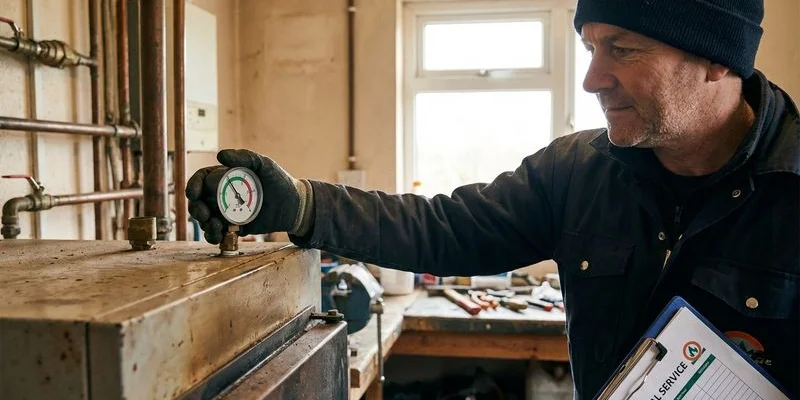
We strictly adhere to Irish regulations regarding who can touch your heating system.
For Gas Boilers: The law is clear: only a Registered Gas Installer (RGI) can service or repair a gas boiler. Check for the RGI ID card with a current year on it. You can verify any installer’s number on the RGII website.
For Oil Boilers: We recommend using an OFTEC-registered technician. While not a criminal offence like with gas, OFTEC technicians are trained to check tanks and lines that general plumbers might miss. Using an unqualified person may void your manufacturer’s warranty immediately.
Book Your Boiler Service Today
We encourage you to take action before the temperature drops.
Consistent maintenance keeps your family safe, protects your bank balance, and ensures your home stays warm through the Atlantic storms.
In County Sligo, where the heating season is demanding, a reliable boiler is essential infrastructure.
At Emergency Plumber Sligo, we provide certified servicing for both oil and gas systems.
Our team carries full diagnostic equipment to spot issues early and give you a complete picture of your heating health.
Call us on 087 341 0745 to secure your slot.
Need a Plumber in Sligo?
Our team is available 24/7 for emergency and scheduled plumbing services across County Sligo.