How to Prevent a Boiler Breakdown This Winter in Sligo
Avoid the misery of a winter boiler breakdown with these practical maintenance tips to keep your heating running reliably all season.
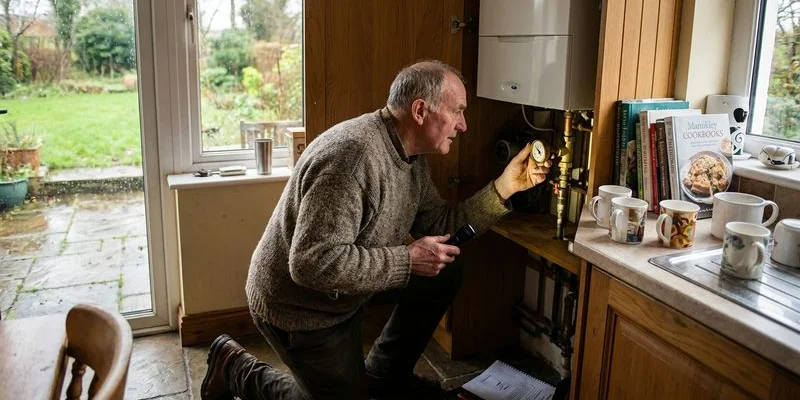
Some Sligo mornings are so cold you can feel them in your bones before you even leave the duvet. We know the feeling of waking up to a silent house because the boiler decided to quit during a Status Yellow freeze. Atlantic storms and temperatures that dipped to -4°C in January 2026 prove that a reliable heating system isn’t a luxury here. It is a survival tool.
You might think boiler breakdowns are just bad luck. Our experience servicing homes from Strandhill to Tubbercurry suggests that 80% of these failures are entirely preventable. Most heating disasters happen because of small, unnoticed issues that compound over time.
We want to help you avoid that expensive emergency call-out. This guide breaks down the practical, proven steps to keep your home warm and your boiler running efficiently all winter long.
Get Your Boiler Serviced Before Winter
This is the single most effective action you can take. We cannot stress enough that catching a small seal failure in September is far cheaper than replacing a cracked heat exchanger in December.
You should aim to book your annual service between August and October. This timing avoids the frantic rush when the first frost hits Sligo and engineers are booked solid for weeks.
Who should do the work?
- Gas Boilers: You must use a Registered Gas Installer (RGII). This is a legal requirement in Ireland. Learn more about our gas boiler service.
- Oil Boilers: We recommend using an OFTEC-registered technician to ensure your system meets safety and efficiency standards. See our oil boiler service page.
The Financial Logic A standard boiler service typically costs between €170 and €200. Compare that to an emergency repair bill which can easily exceed €500 plus parts on a weekend. Regular maintenance also keeps your efficiency high, which is critical when heating oil prices are hovering around €470 for 500 litres (as of early 2026).
During a service, a qualified engineer will:
- Clean the burner and replace consumable parts (nozzle and filters for oil boilers)
- Check combustion efficiency and adjust settings
- Inspect the heat exchanger for cracks or soot build-up
- Test all safety devices
- Check the flue for proper draft and safe exhaust
If you have not had your boiler serviced this year, book one now. Waiting for the first cold snap is a gamble you are likely to lose.
Check and Top Up Your Boiler Pressure
Your boiler needs stable pressure to circulate hot water effectively. We often find that a boiler “breakdown” is actually just a system that has dropped below the operating threshold.
Check the pressure gauge on the front of your unit. It should read between 1.0 and 1.5 bar when the system is cold. If the needle drops below 1 bar, modern boilers will often shut down automatically to protect the pump.
How to top up the pressure:
- Locate the filling loop (usually a silver braided flexible hose with two valves underneath the boiler).
- Open the valves slowly. You will hear water rushing in.
- Watch the gauge closely. Close the valves immediately when it reaches 1.2-1.5 bar.
- Monitor the gauge for the next few days. If it drops again, you likely have a leak.
A Note for Open-Vented Systems Many older rural homes in County Sligo use an open-vented (gravity-fed) system instead of a pressurized one. These setups rely on a small feed and expansion tank in the attic. You must ensure this tank has water and that the ball valve moves freely.
Bleed Your Radiators
Trapped air is a silent efficiency killer. We frequently see systems where the boiler is working perfectly, but the radiators are lukewarm because air pockets are blocking the flow.
You can fix this yourself in about 20 minutes.
The Step-by-Step Guide:
- Turn on your heating and let all radiators warm up.
- Feel the top of each radiator. If it is cooler than the bottom, you have trapped air.
- Turn off the heating and let the system cool down (this prevents scalding).
- Use a radiator key to open the bleed valve at the top corner.
- Hold a cloth underneath and turn the key slightly until you hear a hissing sound.
- Close the valve efficiently once water starts to trickle out.
After you finish, check your boiler pressure again. Releasing that air often lowers the system pressure, so you may need to top it up.
Protect Your Condensate Pipe
This is the number one cause of boiler failure during freezing weather. Modern condensing boilers release acidic wastewater through a plastic pipe that runs to a drain.
The Problem: If this pipe runs externally, the water inside can freeze when temperatures drop below zero. This ice block triggers a safety sensor that shuts down the boiler entirely.
How to prevent frozen condensate pipes:
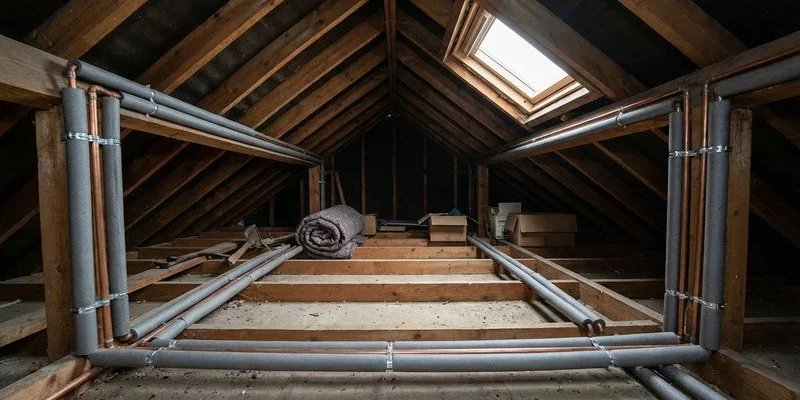
- Insulate the pipe: Use high-quality waterproof lagging (like Armaflex) on any external sections.
- Check the gradient: The pipe should have a steep fall so water flows away quickly instead of pooling.
- Emergency Thaw: If it freezes, pour warm (not boiling) water over the pipe to melt the ice, then reset the boiler.
If this happens repeatedly, ask your engineer about installing a “Trace Heating” kit. This is a small electrical wire that keeps the pipe just warm enough to prevent freezing.
Monitor Oil Levels (Crucial for Rural Sligo)
Running out of oil is a surprisingly common reason for “no heat” calls. We see this frequently in rural areas like Ballymote and Easkey where piped gas isn’t available.
Why it’s a problem: When an oil tank runs dry, sludge from the bottom of the tank gets sucked into the fuel lines. This clogs the filters and nozzle. You cannot just refill the tank and restart it. An engineer must come out to bleed the airlock and change the contaminated filters.
Prevention strategies:
- The “Quarter Tank” Rule: Order a refill when your gauge hits the 1/4 mark. Delivery times can stretch to 2-3 weeks during December storms.
- Install a Monitor: A “Watchman” sonic gauge plugs into a socket in your kitchen and flashes when levels are low.
- Know the Price: Kerosene prices fluctuate. Buying 1000 litres is usually cheaper per litre than buying 500.
Test Your Heating Controls
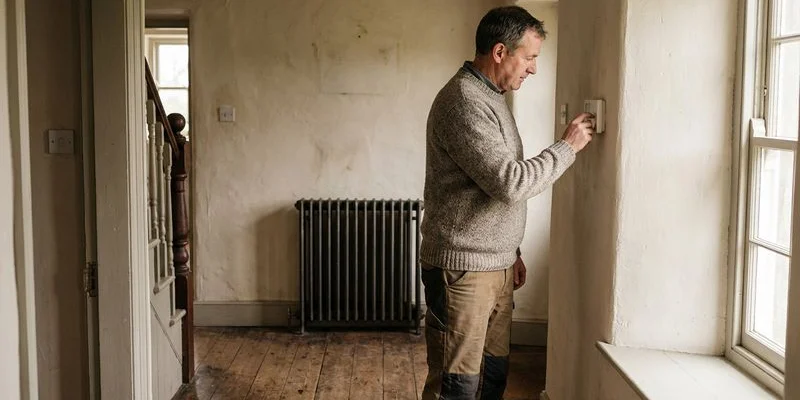
A thermostat that doesn’t click or a timer that doesn’t spin will leave you cold regardless of how healthy your boiler is.
Your Pre-Winter Checklist:
- Room Thermostats: Listen for the “click” when you turn the dial up.
- Batteries: Wireless thermostats eat batteries. Replace them every 12 months with high-quality alkaline ones.
- TRVs (Radiator Valves): Twist the valves on your radiators fully open and closed a few times. They can seize up if left in one position all summer.
Consider a Power Flush
Does your heating system take an hour to warm up? We often diagnose this as a circulation issue caused by “magnetite” sludge. This black, iron-oxide gunk builds up in radiators and pipes over the years.
A power flush uses a high-velocity machine and chemicals to strip this debris out of your system.
| Feature | Details |
|---|---|
| Typical Cost | €300 - €700 (depending on radiator count) |
| When to do it | Every 5-10 years, or when installing a new boiler |
| Main Benefit | Can improve radiator efficiency by up to 15% |
| Signs you need it | Radiators are cold at the bottom; boiler makes banging noises |
While it is an investment, a clean system places less strain on your pump and heat exchanger.
Keep the Boiler Area Clear
Your boiler needs to breathe. We frequently find boilers in utility rooms buried under coats, ironing boards, or boxes of holiday decorations.
Why ventilation matters: Oil and gas boilers require a steady supply of fresh air for combustion. Blocking the vents reduces efficiency and can lead to dangerous Carbon Monoxide (CO) production.
Check your flue terminal outside as well. Ensure that overgrown ivy or bird nests are not blocking the exhaust. A blocked flue is a critical safety hazard that will cause an immediate shutdown.
Know What to Do If Your Boiler Breaks Down
Preparation is key, but sometimes mechanical parts just fail. If you wake up to a cold house, follow this logical sequence before calling for help.
- Check the basics: Is the power switch on? Is the thermostat calling for heat? Is there oil in the tank?
- Check the pressure: Is the gauge below 1 bar? Top it up if needed.
- Inspect the condensate: If it is freezing outside, check the external plastic pipe for ice.
- The Reset Button: Press the reset button on the boiler once. If it fires and then locks out again, do not press it a second time. This could damage the control box.
If these steps fail, it is time to call a professional.
Plan Ahead, Stay Warm
Winter boiler breakdowns are largely preventable with a bit of preparation. We have seen time and again that the homeowners who book their service in September and bleed their radiators in October are the ones who stay warm through February.
Simple steps like checking your pressure and lagging your pipes can save you hundreds of euros. They also save you from the misery of huddling around an electric heater waiting for a van to arrive.
At Emergency Plumber Sligo, we offer both annual boiler servicing and emergency boiler repairs across County Sligo. Whether you need a pre-winter service or your boiler has already broken down, we are here to help.
Call us on 087 341 0745 to book your boiler service or for emergency assistance this winter.
Need a Plumber in Sligo?
Our team is available 24/7 for emergency and scheduled plumbing services across County Sligo.