How to Stop a Dripping Tap: Quick Fixes and When to Call a Plumber
A dripping tap wastes water and money. Learn simple fixes you can try yourself and when it is time to call in a professional plumber.
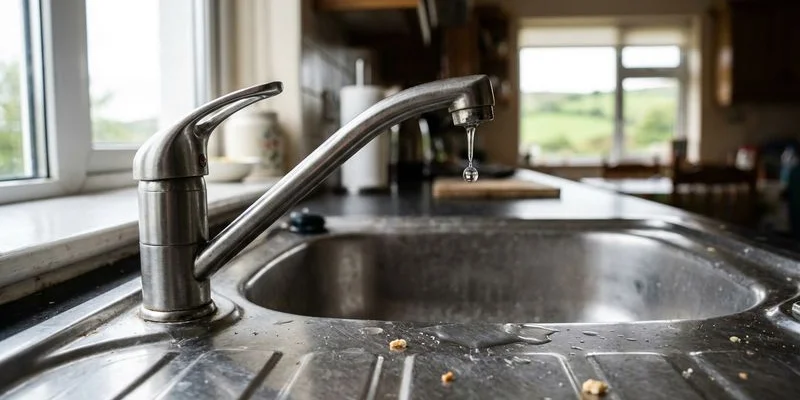
A dripping tap is one of those household annoyances that is easy to ignore. The steady rhythm seems harmless enough at first. But over time, a single dripping tap wastes a surprising amount of water and adds unnecessary costs to your household bills.
Data from Irish Water indicates that a tap dripping just once per second wastes over 10,000 litres per year. That is enough water to fill a small swimming pool or run a dishwasher 600 times.
Beyond the waste, that constant drip can stain your sink or basin and erode the tap seat. It also has a knack for keeping you awake at night if the bathroom is near your bedroom.
We have found that many dripping taps can be fixed with basic tools and a replacement washer. Here is how our team diagnoses the problem, how you can fix it, and when you should call a professional.
Why Do Taps Drip?
Understanding why your tap is dripping helps you choose the right fix. The cause almost always depends on the internal mechanism of the fixture.
Traditional taps (pillar taps and capstan taps)
These are the most common taps in older Irish homes, including many properties across County Sligo. They utilize a compression washer mechanism. When you turn the handle, a rubber washer presses against a brass seat inside the tap body to stop the flow.
Time is the enemy here. This washer eventually wears out, hardens, or deteriorates, and water begins to seep past it.
Common causes:
- Worn or hardened washer: The rubber loses flexibility and cannot form a seal.
- Damaged tap seat: The brass surface becomes pitted or scratched, allowing water to pass even with a new washer.
- Worn O-ring on the spindle: This specific failure causes leaking around the handle neck rather than the spout.
- Corrosion of internal components: Mineral deposits can seize the jumper valve.
Mixer taps
Modern mixer taps (single lever or dual handle) generally use ceramic disc cartridges instead of traditional rubber washers. These cartridges contain two ultra-hard ceramic discs that align to allow or block water flow.
They are significantly more durable than washers. A quality ceramic cartridge can last 500,000 cycles, but they are not invincible.
Common causes:
- Scratched ceramic discs: Grit or sand in the water supply can score the discs.
- Debris trapped between the discs: This is common in areas with hard water or after mains pipework repairs.
- Damaged O-rings or seals: The rubber seal at the base of the cartridge can fail even if the discs are fine.
- Cartridge failure: The plastic housing can crack under high pressure.
Monobloc taps
These single-lever taps are standard in modern kitchens and use a similar ceramic cartridge system. The main difference is that the cartridge is larger (usually 35mm or 40mm) and controls both flow and temperature.
Fixing a Traditional Tap: Step by Step
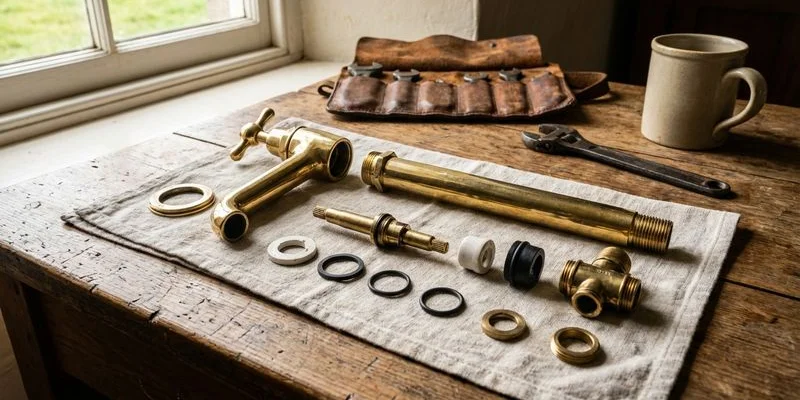
If you have a traditional pillar tap with a worn washer, this is a repair most handy homeowners can manage. You will need a few specific tools to get the job done right without damaging the chrome.
Required Tools:
- An adjustable spanner (or a correctly sized open-ended spanner)
- A flat-head screwdriver
- A replacement washer (take the old one to the hardware shop to match the size; most kitchen taps use a 1/2 inch washer, while bath taps often use 3/4 inch)
- PTFE tape (Plumber’s tape)
- A cloth or old towel
The process
-
Turn off the water supply to the tap. Look for the isolation valve beneath the sink (usually a slot-screw you turn 90 degrees) or turn off the mains stopcock.
-
Turn the tap on fully to drain any remaining water from the pipe and release pressure.
-
Put the plug in the sink. This prevents small screws or washers from falling down the drain.
-
Remove the handle. On most taps, there is a small decorative cap on top (marked H or C). Pry this off with a flat screwdriver to reveal a screw underneath. Remove the screw and lift off the handle.
-
Unscrew the headgear. This is the brass assembly that contains the washer. Use an adjustable spanner, turning anticlockwise. Wrap a cloth around the tap body to protect the chrome finish from scratches.
-
Remove the old washer. It sits at the bottom of the headgear, held in place by a small nut or pressed onto a spigot (jumper). Remove the retaining nut or pry the old washer off.
-
Fit the new washer. Press the replacement washer firmly into place. If there is a retaining nut, tighten it securely but do not overtighten.
-
Reassemble the tap. Screw the headgear back into the tap body (clockwise), refit the handle, and replace the decorative cap.
-
Turn the water back on slowly and test. The drip should be gone.
Fixing a Mixer or Monobloc Tap
Modern mixer taps are slightly more complex because they use ceramic cartridges rather than washers. Precision is key here.
- Turn off the water supply and open the tap to drain it.
- Remove the handle indicator. Look for a small red/blue cap or a rubber plug, usually on the front or under the lever handle.
- Loosen the grub screw. Use an Allen key (usually 2.5mm or 3mm) to loosen the small screw inside the hole. Pull the handle off.
- Remove the shroud. Unscrew the decorative cover (often by hand) to reveal the brass retaining nut.
- Remove the cartridge retaining nut. Use a large adjustable spanner or a 27mm-32mm box spanner.
- Pull out the old cartridge. Note its orientation, as there are locating pins on the bottom that must align with holes in the tap body.
- Insert the new cartridge and reassemble in reverse order.
Important: Ceramic cartridges are not universal. They vary by diameter (35mm vs 40mm) and seating type (flat vs raised). Take the old one with you to the plumbing merchant to ensure you get an exact match.
When DIY Will Not Work
Some dripping taps cannot be fixed with a simple washer or cartridge change. We often see homeowners spend hours trying to fix a tap that is actually beyond repair.
Damaged tap seat
If the brass seat inside the tap body is pitted, scored, or corroded, a new washer will not seal properly. The rough metal will tear up the new washer in days, and the tap will continue to drip.
A plumber can re-grind or re-seat the brass seat using a reseating tool. However, for cheaper taps, replacement is often more economical.
Corroded or seized components
In older Sligo homes, taps that have not been maintained for years can seize solid. If the headgear will not unscrew, or the handle will not come off, forcing it is dangerous.
Excessive force can twist the copper pipework under the sink or crack the ceramic basin. A plumber has the experience and tools (like releasing fluids and specific leverage techniques) to deal with seized fittings safely.
Very old taps with obsolete parts
Some older taps use non-standard washers or obsolete cartridges that are no longer manufactured. Searching for these parts can cost more in time and fuel than buying a modern replacement.
In these cases, the most practical solution is to replace the entire tap. This also gives you the benefit of a fresh warranty.
Taps that drip from the spout AND around the handle
If water is leaking from both the spout and around the base of the handle, the tap has multiple failing components. While you can try replacing the washer and the O-ring, if the tap is old, the internal brass is likely worn out.
Should You Repair or Replace?
Making the right financial decision depends on the age and quality of the fixture. Here is a simple decision guide to help you choose.
| Situation | Recommendation | Estimated Part Cost |
|---|---|---|
| Traditional tap, under 15 years old | Repair (new washer) | €2 - €5 |
| Mixer tap, cartridge available | Repair (new cartridge) | €15 - €40 |
| Tap over 20 years old with multiple issues | Replace the tap | €40 - €150+ |
| Damaged tap seat | Repair (re-seat) or replace | Labour dependent |
| Parts no longer available | Replace the tap | €40 - €150+ |
| Tap is part of a dated bathroom/kitchen | Replace (upgrade aesthetics) | Variable |
A basic kitchen tap costs from €30-50 for a functional model up to €200+ for a quality branded tap. Basin taps range from €25 for a simple pillar tap to €150+ for a modern mixer. Installation by a plumber typically costs €80-150 per tap, depending on access and complexity.
The Cost of Ignoring a Dripping Tap
Ignoring the problem is often the most expensive option. Beyond the water waste (10,000+ litres per year), a dripping tap causes secondary damage.
Hidden costs include:
- Stain sinks and basins: Persistent dripping causes limescale, rust, or green copper stains that are difficult to remove without harsh chemicals.
- Damage the tap seat: Each drip erodes the brass seat a tiny amount (a process called wire drawing). Over months, this turns a €2 washer repair into a complete tap replacement.
- Increase energy bills: If it is the hot tap dripping, your boiler or immersion is heating water that goes straight down the drain. This can add noticeable amounts to your electricity or gas bill.
- Contribute to damp: A persistently dripping tap can saturate the overflow area or splash onto the counter, leading to mold and damaged sealant.
Prevention Tips
- Turn taps off gently: Forcing a tap closed with excessive pressure accelerates washer wear. Turn it just far enough to stop the flow.
- Fix drips promptly: The sooner you address a drip, the less damage is done to the washer, seat, and sink.
- Use the right tap for the job: If you are replacing taps, choose quality fittings from a reputable manufacturer. Cheap taps often use inferior cartridges that fail within 12-18 months.
- Descale regularly: In hard water areas, limescale build-up can prevent cartridges from sealing properly. A periodic clean with a descaling solution helps extend their life.
Need Help With a Dripping Tap?
If your dripping tap is beyond a simple washer change, or if you would rather have a professional handle it, Emergency Plumber Sligo is here to help. We repair and replace taps of all types across County Sligo, from traditional pillar taps in period properties to modern monobloc mixers in new kitchens.
Our vans carry a range of common washers, cartridges, and O-rings, so most repairs can be completed in a single visit.
Call us on 087 341 0745 to stop that drip once and for all.
Need a Plumber in Sligo?
Our team is available 24/7 for emergency and scheduled plumbing services across County Sligo.