How to Winterise Your Plumbing: Protect Your Home from Frozen Pipes
Freezing temperatures can burst pipes and cause flooding. Follow this winterisation checklist to protect your Sligo home this winter.
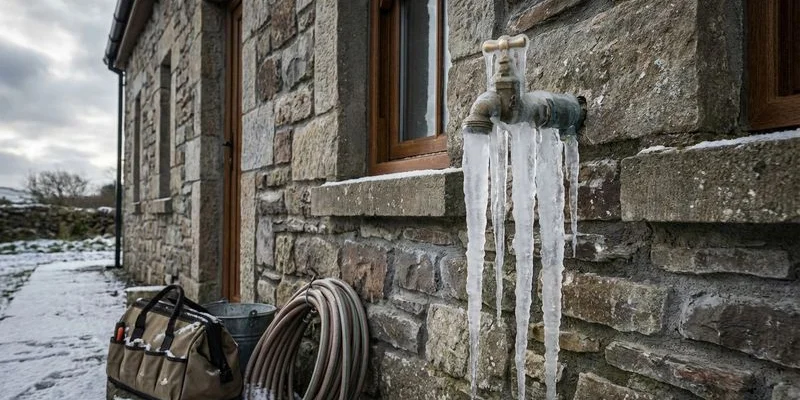
Every winter in County Sligo, we see the same avoidable disaster unfold in homes and businesses across the region. The temperature drops, a pipe freezes, and suddenly a ceiling collapses under the weight of escaping water from a burst pipe.
It is a chaotic situation that no property owner wants to face.
Water expands by roughly 9% when it turns to ice. This expansion creates thousands of pounds of pressure per square inch inside your plumbing system. Copper splits, plastic fittings pop off, and compression joints are pushed apart.
We have spent years repairing the aftermath of cold snaps, so we know exactly where these systems fail. The damage often occurs silently, only revealing itself when the ice thaws and water begins to flood the property.
Preventing this is far cheaper than fixing it.
Here is the exact winterisation protocol we use to protect homes in the northwest.
Insulate Exposed Pipes Correctly
Most homeowners think any foam wrap will do the job.
We see this mistake constantly.
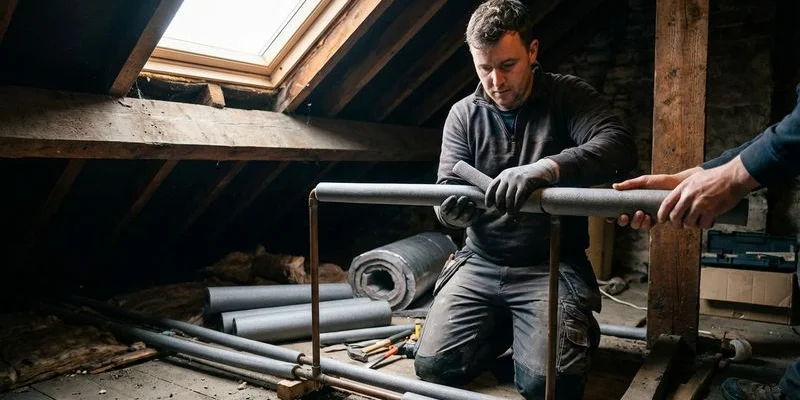
The standard 9mm thick lagging sold in some discount stores is often insufficient for the exposed attic spaces or garages found in Sligo homes. You need the right grade of insulation for the location of the pipe.
Target these high-risk zones first:
- The Attic Void: Pipes here are effectively outside the thermal envelope of your house.
- Unheated Garages: Any pipework leading to a washing machine or utility sink in a garage is at high risk.
- Crawl Spaces: Older bungalows often have suspended timber floors with copper pipes running in the cold draft beneath.
- North-Facing Walls: Pipes buried in or running along northern walls get the least solar gain and freeze fastest.
How to Apply Lagging Like a Pro
Go to a supplier like Chadwicks or Woodie’s and look for polyethylene foam insulation or synthetic rubber (nitrile) lagging.
We recommend using insulation with a minimum wall thickness of 19mm to 25mm for pipes in unheated areas like attics.
Secure the lagging properly to ensure it works. Use the pre-slit tubes and slide them over the pipe. Secure the seams with duct tape or cable ties every 300mm. Miter your corners (cut them at 45-degree angles) so the foam joins perfectly at bends without leaving copper exposed.
Even a tiny gap at a valve or elbow allows cold air to penetrate and freeze the line.
Consider Trace Heating for Problem Areas
Insulation merely slows down heat loss, but it does not generate heat.
For pipes that have frozen before, we install trace heating kits. This is a self-regulating electric cable that you strap directly to the pipe under the insulation. It detects when the ambient temperature drops close to freezing (usually around 3°C to 5°C) and gently warms the pipe.
Running costs are minimal since it only activates when necessary. It is the only guaranteed solution for pipes in severely exposed locations where standard lagging fails.
Insulate the Attic Water Tank
Your cold water storage tank is often the largest reservoir of static water in your home.
It sits in the coldest part of the house and is prone to freezing over, which can crack the tank body or jam the ball valve.
Follow these standards for tank protection:
- Install a Byelaw 30 Kit: This is a complete tank jacket insulation set that meets water regulations. It usually includes a rigid lid and a snug jacket.
- Protect the Ball Valve: Ensure the insulation covers the top of the tank but does not obstruct the movement of the ball arm.
- Leave the Bottom Exposed: Do not insulate directly under the tank. This allows heat from the room below to rise through the ceiling and warm the tank base.
- Eliminate Drafts: Check that the eaves of the roof are not directing a freezing draft straight onto the tank.
Isolate and Drain Outside Taps
External taps are the most frequent casualty of Irish winters.
The metal tap acts as a heat sink, drawing cold directly into the water inside the pipe. If this pipe passes through your cavity wall, a burst here can flood your kitchen or living room behind the wall.
The Hosepipe Warning: Never leave a hosepipe connected to an outside tap in winter. Water trapped in the hose freezes and expands back into the tap, splitting the mechanism.
Our winterisation steps for external supplies:
- Locate the internal isolation valve (usually under your kitchen sink or in a utility room).
- Turn this valve to the “closed” position (perpendicular to the pipe).
- Go outside and open the tap to drain the remaining water.
- Leave the outside tap in the open position.
- Fit an insulated tap jacket (available for €5-€10) over the fixture for added security.
Service Your Boiler Before the Rush
A boiler breakdown during a Status Yellow or Orange weather warning is a dangerous scenario.
We see a massive spike in calls to repair boilers exactly when the weather is coldest. If your heating fails when it is -4°C outside, your pipes will begin to freeze within hours.
Book a registered professional. For gas boilers, ensure you use an RGII (Registered Gas Installer of Ireland) engineer. For oil boilers, look for an OFTEC registered technician.
A proper service includes:
- Efficiency Check: Ensuring your boiler burns fuel efficiently saves money.
- Safety Inspection: Checking for carbon monoxide leaks and proper flue ventilation.
- Pressure Test: Verifying the system pressure is stable (usually between 1.0 and 1.5 bar).
- Visual Check: Identifying weeping joints or corrosion before they become leaks.
Maintain Minimum Temperatures
Many people turn their heating off completely when leaving for a winter holiday to save money.
This is a false economy that often leads to disastrous insurance claims.
Most Irish home insurance policies (such as those from Aviva, Allianz, or AXA) have strict “unoccupied” clauses. They typically require you to maintain a minimum temperature (often 15°C) or drain the system if the house is empty for more than a few days.
Smart Control Strategy: Install a smart thermostat like Hive, Nest, or Tado. These devices allow you to monitor your home’s temperature from your phone anywhere in the world. We advise clients to set a “frost protection” schedule that keeps the property at a minimum of 12°C to 15°C, ensuring the fabric of the building never gets cold enough to freeze pipes.
Check Your Heating Controls
A thermostat is useless if it cannot communicate with the boiler.
Wireless thermostats are standard in many Sligo homes, but their batteries often fail without warning. Check the battery indicator on your wall unit now. Replace them with high-quality alkaline batteries every 12 months regardless of the reading.
System preparation checklist:
- Verify the timer is set correctly for winter hours.
- Test the “boost” function to ensure the boiler fires on demand.
- Bleed your radiators to ensure hot water circulates to the top of every panel.
Locate Your Stopcocks
Speed is everything when a pipe bursts.
Water pours out of a 15mm pipe at a rate of roughly 10 to 15 litres per minute. Every minute you spend searching for the off switch equals more water damage to your floors and ceilings.
Find these two valves immediately:
- Internal Stopcock: Usually found under the kitchen sink. Test it by turning it clockwise. If it is seized, do not force it aggressively. Apply a penetrating oil like WD-40 and gently work it back and forth.
- External Stopcock: This is usually in a boundary box on the pavement. You may need a long-handled “crutch key” to operate it. Note that the valve outside the boundary is typically the property of Uisce Éireann (Irish Water), but knowing where it is can save your home if the internal valve fails.
Use the Attic Hatch Trick
Extreme cold snaps in Ireland are rare but intense.
During nights where temperatures drop significantly below freezing (such as -5°C or lower), simple airflow can save your plumbing. Open your attic hatch slightly—just a few inches. This allows warm air from your living space to rise into the cold attic void.
A Note of Caution: Do not leave this open permanently. Prolonged warm moist air entering a cold attic can cause condensation and mold on the roof timbers. Use this tactic only during the peak of a freezing spell.
Action Plan: If Pipes Freeze
Panic is the enemy during a plumbing emergency.
If you turn on a tap and nothing comes out, or you see frost on a visible pipe, you have a freeze.
Follow this safe thawing sequence:
- Shut Off the Water: Close the internal stopcock immediately. This stops more water from rushing in once the ice plug melts.
- Open the Tap: Open the affected faucet. This relieves pressure and gives the water somewhere to go as it thaws.
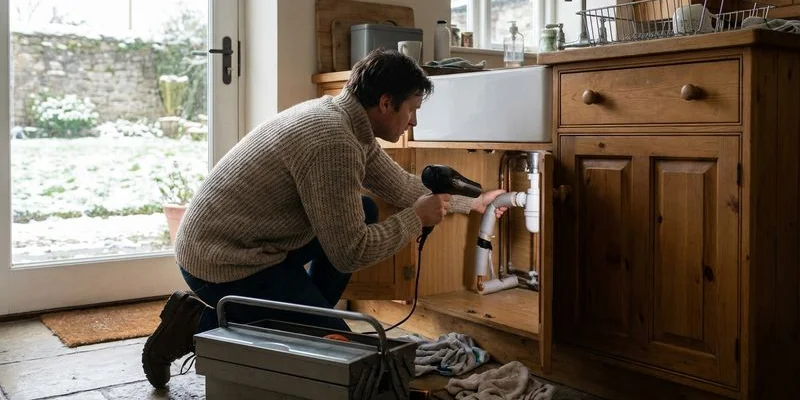
- Apply Gentle Heat: Use a hairdryer, warm towels, or a portable heater placed at a safe distance. Start heating the pipe nearest the tap and work your way back toward the frozen area.
- Avoid Naked Flames: Never use a blowtorch or heat gun. Intense heat can boil the water inside, causing steam pressure that ruptures the pipe instantly.
The Real Cost: Prevention vs. Cure
We have updated these figures to reflect current material and labour costs in Ireland for late 2025.
| Prevention Measure | Estimated Cost (Materials Only) |
|---|---|
| Pipe Insulation (High Grade) | €2.50 - €4.00 per metre |
| Tap Jacket Cover | €8.00 - €12.00 |
| Byelaw 30 Tank Jacket Kit | €35.00 - €55.00 |
| Boiler Service (Standard) | €100.00 - €160.00 |
| Total Prevention Investment | Approx. €150 - €250 |
| Repair Costs (Post-Disaster) | Estimated Cost (Labour & Materials) |
|---|---|
| Emergency Call-Out (Out of Hours) | €150 - €250 |
| Burst Pipe Repair | €180 - €450 |
| Plasterboard Ceiling Repair & Skim | €400 - €1,200 |
| Flooring Replacement | €600 - €3,000+ |
| Insurance Excess | €250 - €500 |
| Total Disaster Cost | €1,500 - €5,000+ |
The financial logic is undeniable. Spending a Saturday afternoon protecting your home costs less than the excess on your insurance policy.
Prepare Now, Not Later
Waiting for the first frost warning on Met Éireann is waiting too long.
Supplies of lagging and tap covers frequently sell out in local hardware stores the moment a cold snap is announced. Plumbers become fully booked with emergencies, making preventative visits impossible to schedule.
We encourage you to take action while the weather is mild.
At Emergency Plumber Sligo, we offer comprehensive winterisation inspections. We check your stopcocks, insulate vulnerable pipework, and ensure your heating system is ready for the Atlantic winter.
Call us on 087 341 0745 to book a system check or save our number for emergency assistance.
Need a Plumber in Sligo?
Our team is available 24/7 for emergency and scheduled plumbing services across County Sligo.