Is a Power Flush Worth It? Benefits, Costs, and When You Need One
Wondering if power flushing is worth the investment? We explain what it does, how much it costs, and the signs your system needs one.
If you have been told your central heating system needs a power flush, you are likely questioning the investment. It is a substantial cost, and you need to know if it is a genuine requirement or an upsell.
We face this question constantly from homeowners in Sligo. Skepticism is healthy when maintaining a property.
The short answer is that a power flush is essential when your system shows specific symptoms of circulation failure. However, it is not a magic cure for every heating issue.
Let’s break down exactly what happens during this process, the specific data on efficiency gains, and the local costs you can expect here in the West of Ireland.
What Is a Power Flush?
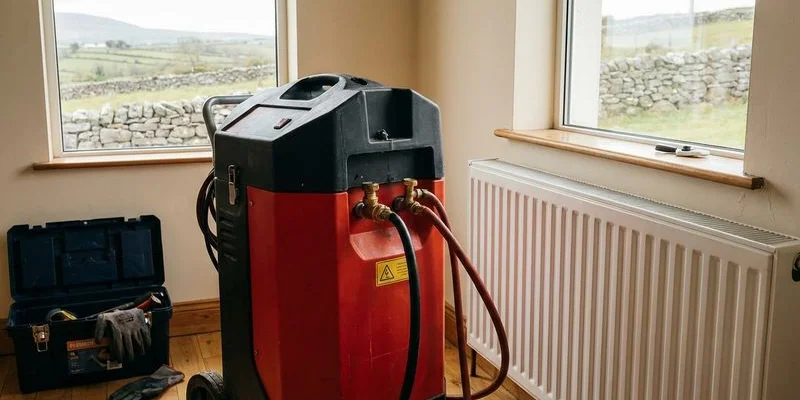
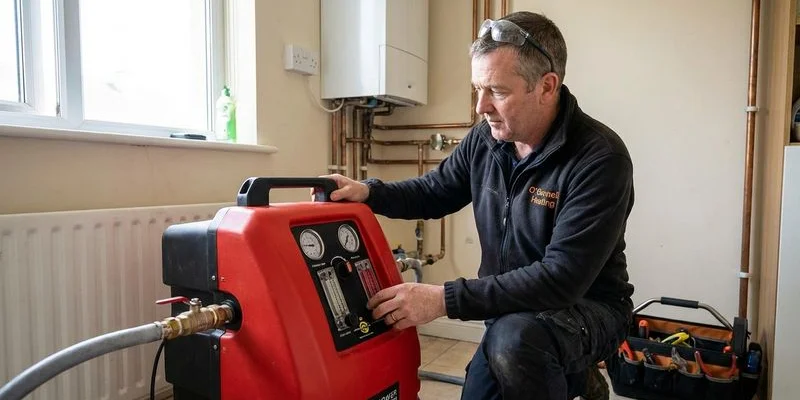
A power flush is a restorative deep-cleaning process for your central heating circuit. We connect a high-flow specialized machine (often a Kamco or Norstrom unit) to your system. This unit pumps a proprietary chemical blend through your boiler, pipes, and radiators at a velocity much higher than your standard circulator pump.
This process targets specific contaminants:
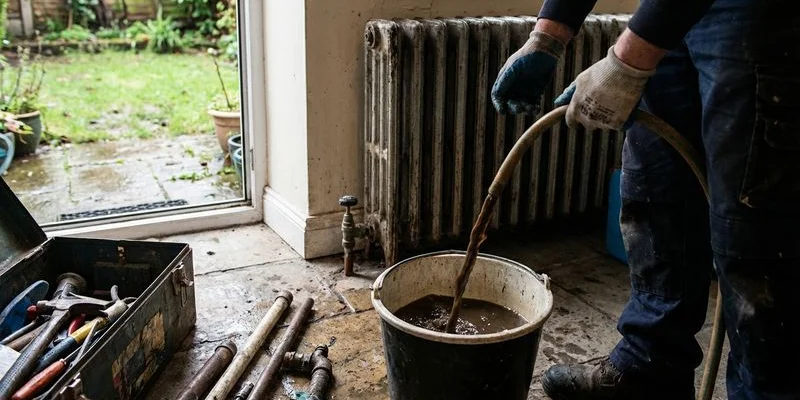
- Magnetite Sludge: This is the black, mud-like substance formed by the corrosion of iron and steel components.
- Limescale: A common issue in areas with hard water, where mineral deposits narrow the pipework.
- Installation Debris: Flux residues and solder particles left over from the original build.
- Bacterial Growth: Biofilms that thrive in untreated, stagnant heating water.
The machine uses a mechanism called “dynamic flow reversal.” By instantly switching the direction of the water flow, we create turbulence that dislodges stubborn debris clinging to the inside of radiators.
The entire process typically takes 6 to 8 hours. We continue flushing until the water exiting the system tests within 5% of the purity of the mains water supply.
Signs Your System Needs a Power Flush
Visual confirmation is the only way to be certain. We recommend looking for these specific physical symptoms before agreeing to any work.
Cold Spots on Radiators
This is the most reliable indicator of sludge buildup. Sludge is heavier than water, so it settles at the bottom of radiators.
If a radiator is hot at the top but stone cold at the bottom, flow is physically blocked. Bleeding the radiator will not fix this issue because air rises to the top, while sludge sinks to the bottom.
The “Kettling” Noise
Boilers should run relatively quietly. If you hear banging, popping, or a rumbling sound like a kettle boiling, you have a problem.
This noise occurs when sludge or scale settles on the boiler’s heat exchanger. The debris traps water against the superheated metal, causing it to flash-boil into steam. This places immense stress on the heat exchanger, which is the most expensive component of your boiler.
Slow Heat-Up Times
Monitor how long it takes for your house to feel warm after the timer kicks in. If your system used to reach temperature in 20 minutes but now takes an hour, the circulation is restricted.
The boiler is working harder and burning more fuel to push heat through narrowed pipes.
Pump Failure and Boiler Lockouts
Circulating pumps often fail because they are trying to push water through thick sludge. If your boiler frequently locks out or requires resetting, the internal sensors may be detecting flow restrictions.
The Magnet Test
You can perform a simple check yourself if you have copper pipes near your boiler. Place a strong magnet against a copper pipe.
Copper is not magnetic. If the magnet sticks or you feel a drag as you move it along the pipe, the pipe is filled with iron oxide sludge.
How Much Does a Power Flush Cost?
Pricing in County Sligo varies based on the size of the property and the type of heating system (open vented vs. sealed).
We have compiled current market averages for professional flushing in the region:
| System Size | Estimated Cost (VAT inc.) | What to Expect |
|---|---|---|
| Small (up to 6 radiators) | €400 - €550 | Standard apartments or small cottages. Usually completed in half a day. |
| Medium (7-10 radiators) | €500 - €700 | Typical 3-bed semi-detached home. Takes a full day. |
| Large (11-15 radiators) | €650 - €900 | Larger detached homes. May require two technicians. |
| Extra Large (15+ radiators) | €800 - €1,200+ | substantial properties. Often requires a pre-flush chemical treatment days in advance. |
These prices generally cover the labor, the machine hire, the cleaning chemicals (like Fernox F3 or Sentinel X800), and the final inhibitor (Fernox F1).
Additional costs may arise if we find seized valves that need replacing or if you choose to install a permanent magnetic filter.
Is It Worth the Money?
The upfront cost is significant, so the return on investment must be clear.
Quantifiable Efficiency Gains
Independent research by Gastec (now Kiwa) verified that sludge affects system efficiency. A dirty system can increase fuel bills by up to 15%.
With current kerosene prices in Ireland fluctuating around the €1.00 - €1.20 per liter mark, a 15% loss on an annual bill of €1,500 equates to €225 wasted every year.
The Component Protection Factor
Replacing a heat exchanger or a boiler PCB (circuit board) typically costs between €400 and €700. A full boiler replacement starts at €3,000.
Removing the sludge eliminates the primary cause of these failures. Most boiler manufacturers, including Worcester Bosch and Viessmann, will void your warranty if water quality does not meet the IS 813:2014 standard. A power flush ensures you remain compliant.
The Comparison
Here is how the numbers stack up for a standard 3-bed home in Sligo:
- Cost of Flush: ~€600
- Annual Savings (Efficiency): ~€200
- Avoided Repairs (Average): ~€150/year (amortized)
- Payback Period: Less than 2 years
Once the payback period ends, you are effectively saving money every time you turn on the heat.
When a Power Flush Is NOT Worth It
Honesty is vital in our trade. There are specific scenarios where we would advise you not to pay for this service.
Old Gunbarrel Piping
Many older Irish council houses and estate homes built before the 1980s use heavy iron “Gunbarrel” piping. These pipes rust internally over time.
A power flush on Gunbarrel piping can be disastrous. The high pressure can strip away the rust layers that are actually sealing the pipe, leading to multiple leaks throughout the house. In these cases, a chemical flush (gravity only) or a full repipe is the safer option.
Microbore Systems (8mm or 10mm)
Homes built during the 1980s and 90s often utilized narrow microbore plastic or copper tubing. These small pipes block easily.
If a microbore pipe is fully impacted with sludge, a power flush will simply bypass it. The water takes the path of least resistance. We often have to physically cut out and replace blocked sections of microbore rather than flushing them.
Systems That Are Already Clean
If your water runs clear when you bleed a radiator and you have no cold spots, you do not need a flush. Do not let a salesperson convince you to fix a problem you do not have.
A preventive “mains flush” (using just garden hose pressure) and adding fresh inhibitor is sufficient for maintenance in these cases.
How to Protect Your System After a Power Flush
The goal is to perform this service once and never need it again.
Install a Magnetic Filter
We strongly recommend fitting a magnetic filter, such as an Adey MagnaClean Professional 2 or a Spirotech unit, on the return pipe to the boiler.
This device captures magnetic sludge circulating in the system before it hits the boiler. It acts as a permanent kidney for your heating system. You can expect to pay between €150 and €250 for supply and fit, but it is the single best upgrade for boiler longevity.
Maintain Inhibitor Levels
Clean water is actually corrosive to metal. You must add a chemical inhibitor (like Sentinel X100 or Fernox F1) to the water.
This chemical creates a protective film inside the pipes. Your annual boiler service should always include a “dip test” to check the concentration of this inhibitor.
Stop Adding Fresh Water
Every time you drain a radiator or top up pressure, you introduce fresh oxygen. Oxygen reacts with steel to create rust (sludge).
If you find yourself constantly topping up the pressure on your boiler, you have a leak. Fixing the leak is critical to stopping sludge formation.
Our Professional Power Flush Service
We provide comprehensive heating solutions across County Sligo. Our team uses commercial-grade equipment to ensure your system operates at peak efficiency.
We operate with a “diagnosis first” policy. We will test your system water and check for cold spots before recommending a flush. If we believe a flush will cause leaks or fail to solve the problem, we will tell you immediately.
Our service includes:
- Pre-flush thermal imaging to identify cold spots.
- High-velocity cleaning of all radiators and pipework.
- Rad-hammer vibration to dislodge stubborn debris.
- Installation of magnetic filters (optional but recommended).
- Final water quality certification.
Call us on 087 341 0745 to schedule a system assessment. Let’s get your heating running efficiently before the winter sets in.
Need a Plumber in Sligo?
Our team is available 24/7 for emergency and scheduled plumbing services across County Sligo.