Low Water Pressure in Your Home: Causes and Solutions
Struggling with weak water pressure? Discover the most common causes of low water pressure in Irish homes and how to fix them.
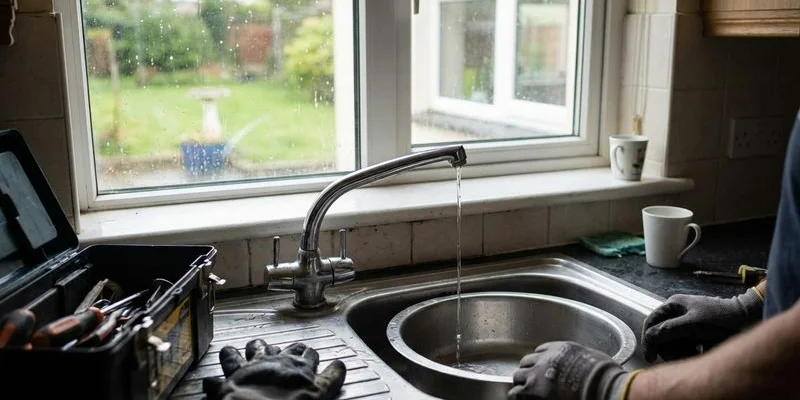
We know the frustration of turning on a shower only to be met with a weak drizzle instead of a steady stream.
It turns a simple morning routine into a daily annoyance.
In County Sligo, this issue appears frequently due to a mix of aging infrastructure, rural typography, and specific plumbing configurations.
Our team diagnoses these pressure drops weekly.
We are going to break down exactly why this happens in local properties and the specific, actionable steps you can take to fix it.
Understanding Water Pressure in Irish Homes
You need to know how water enters your property to solve the issue.
In Ireland, we generally encounter two distinct types of water supply systems.
Mains Pressure (Direct) System
Water travels directly from the Uisce Éireann (Irish Water) mains to every tap in your house.
Your pressure relies entirely on the strength of the municipal supply in your area.
The target pressure at the boundary box is usually 1 bar, roughly enough force to push water 10 meters vertically.
Modern builds in Sligo town often utilize this direct connection.
Gravity-Fed (Indirect) System
This setup remains the standard in the majority of older homes across the county.
Mains water fills a cold water storage tank in your attic.
Gravity then pushes that water down to your hot water cylinder, bath, and bathroom sinks.
The kitchen cold tap is typically the only outlet connected directly to the high-pressure mains.
Physics dictates the pressure in this system.
You get approximately 0.1 bar of pressure for every meter of vertical distance between your water tank and the tap.
That is why ground-floor taps flow better than upstairs ones.
Bungalows suffer the most because the tank sits just above the ceiling, providing very little natural gravitational force.
Common Causes of Low Water Pressure
1. Low Mains Pressure from the Network
If the supply entering your property is weak, every outlet will suffer.
This affects the entire neighborhood.
We see this frequently in rural areas or during peak demand times like mornings and early evenings.
Several factors contribute to this:
- Elevation: Properties located on hills near the reservoir level often struggle with natural pressure.
- Group Water Schemes: Many rural Sligo homes rely on group schemes where pressure fluctuates based on agricultural demand.
- Leaks: A burst pipe on the main road drops pressure for everyone down the line.
What to do: Check with your immediate neighbors. If they share the issue, contact Uisce Éireann (1800 278 278) or your Group Scheme manager.
2. A Partially Closed or Seized Stopcock
The internal stopcock controls the water flow entering your building.
A valve that is not fully open acts like a bottleneck.
This happens often after DIY repairs where someone forgets to turn the valve back to the full “open” position.
What to do: Locate your stopcock, which is usually under the kitchen sink.
Turn it fully anticlockwise.
If you have an older brass valve, turn it fully open and then turn it back one quarter-turn to prevent it from seizing in the future.
3. Corroded or Scaled-Up Pipes
Galvanized steel pipes were the standard in Irish construction decades ago.
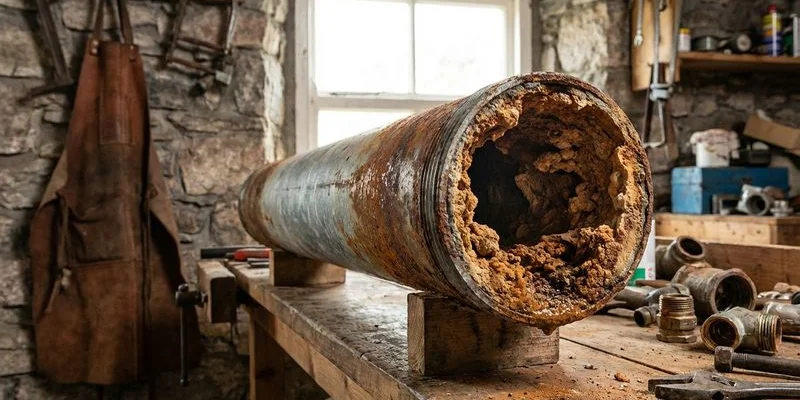
These pipes rust from the inside out.
Over 30 to 40 years, rust and limescale build up, reducing the internal width of the pipe by 50% or more.
Sligo has areas of hard water which accelerates limescale deposits.
What to do: You must replace these pipes.
Modern plastic barrier pipes (like Qual-PEX) or copper are the standard replacements.
Important Note: If you have lead pipes, you may be eligible for the Domestic Lead Remediation Grant.
This government scheme can cover 100% of the replacement costs up to €5,000 if you meet the criteria.
4. Issues with the Attic Tank
The attic tank drives your hot water pressure in a gravity system.
Specific faults here will throttle your flow:
- The Ball Valve: If the float valve sticks, the tank fills too slowly to keep up with a shower.
- Tank Height: In dormer bungalows, the tank is often placed too low in the eaves.
- Airlocks: Air trapped in the pipework acts like a blockage, stopping water from flowing entirely.
5. Shared Supply Pipes
Terraced houses in older estates often share a single supply pipe from the street.
Pressure drops instantly for you when your neighbor turns on their kitchen tap or runs a bath.
This is a legacy infrastructure issue.
Uisce Éireann has programs to separate these supplies, though there is often a waiting list.
6. System Leaks
A hidden leak siphons off pressure before it reaches your taps.
You might not see water, but the signs are there.
Look for:
- Damp patches on ceilings or drywall.
- A hissing sound behind walls or under floorboards.
- A water meter that spins even when all appliances are off.
Fixing the leak restores the system’s integrity and pressure.
7. Faulty Pressure Reducing Valve (PRV)
Modern homes utilize a PRV to stop high mains pressure from damaging appliances.
These valves can fail in the “closed” position.
What to do: A professional plumbing check is required here. We typically set domestic PRVs between 2.5 and 3 bar to balance performance with safety.
Solutions for Low Water Pressure
For Gravity-Fed Systems
Install a Shower Pump This is the most effective upgrade for a bathroom. A dedicated pump pushes water specifically to your shower mixer. Twin-impeller pumps boost both hot and cold water simultaneously. Standard installations range from €450 to €850 depending on whether you choose a plastic or brass-bodied pump.
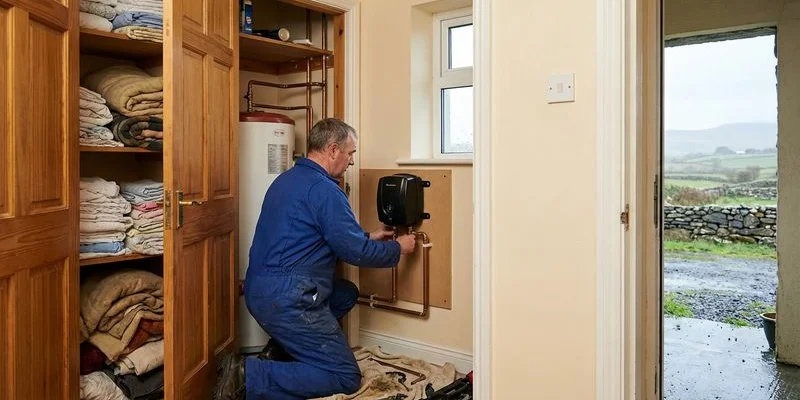
Install a Whole-House Booster Pump You can pressurize the entire house rather than just one shower. These pumps sit near the hot water cylinder and boost the flow to all hot and cold outlets (except the mains-fed kitchen tap). This creates a “hotel-style” pressure experience.
Raise the Cold Water Tank Lifting the tank even half a meter can help. We often build a reinforced platform in the attic to gain that extra gravity head. It is a passive solution that requires no electricity.
Convert to a Pressurized System Removing the attic tank entirely is the premium option. We install an unvented hot water cylinder that uses mains pressure directly. This requires a strong mains supply to work effectively.
For Mains Pressure Systems
Install an Accumulator Tank You cannot simply pump mains water if the supply is weak, as this is illegal and damages the public network. An accumulator tank stores water at pressure and releases it when you open a tap. This acts like a pressure “battery” for your home.
Replace Undersized Service Pipes Many older homes are fed by half-inch (15mm) pipes. Upgrading the pipe from your boundary to your house to a 25mm or 32mm MDPE pipe drastically increases flow volume.
Fix Leaks Repairing a leak is the most cost-effective pressure boost available. It stops the waste of energy and water immediately.
What Pressure Should You Expect?
Reference this table to see if your home is performing within normal limits.
| Location | Typical Pressure | Target Pressure |
|---|---|---|
| Kitchen Tap (Mains) | 1.5 - 3.0 bar | 3.0 bar |
| Upstairs Tap (Gravity) | 0.2 - 0.4 bar | 1.5 bar (with pump) |
| Bungalow Tap (Gravity) | 0.1 - 0.2 bar | 1.5 bar (with pump) |
| Electric Shower | 1.0 bar (Internal) | N/A (Mains fed) |
| Power Shower | 0.1 bar (Gravity) | 2.0 - 3.0 bar |
Anything below 0.3 bar feels incredibly weak.
Most modern shower valves actually require a minimum of 0.5 bar just to function correctly.
Sligo-Specific Considerations
Local geography and housing styles create unique challenges here.
- Dormer Bungalows: These are extremely common in Sligo. The limited roof height means gravity systems almost always struggle without a pump.
- Hard Water Areas: Parts of Sligo have limestone-rich water. We see shower heads and mixer valves blocked with limescale, which mimics low pressure. Descaling your shower head is an easy first fix.
- Private Wells: If you are off the grid, your pressure depends on your well pump’s pressure switch settings. These may need adjustment.
Get Your Water Pressure Sorted
You do not have to live with a trickle.
A solution exists for every budget, from a simple valve replacement to a full system upgrade.
Our team at Emergency Plumber Sligo handles these specific pressure issues daily.
We assess the root cause, check your flow rates, and propose the fix that gives you the best return on investment.
Call us on 087 341 0745 for a water pressure assessment.
Need a Plumber in Sligo?
Our team is available 24/7 for emergency and scheduled plumbing services across County Sligo.