Oil Boiler vs Gas Boiler: Which Is the Better Choice for Your Sligo Home?
Choosing between oil and gas for your new boiler? We compare running costs, efficiency, availability, and which suits County Sligo homes best.
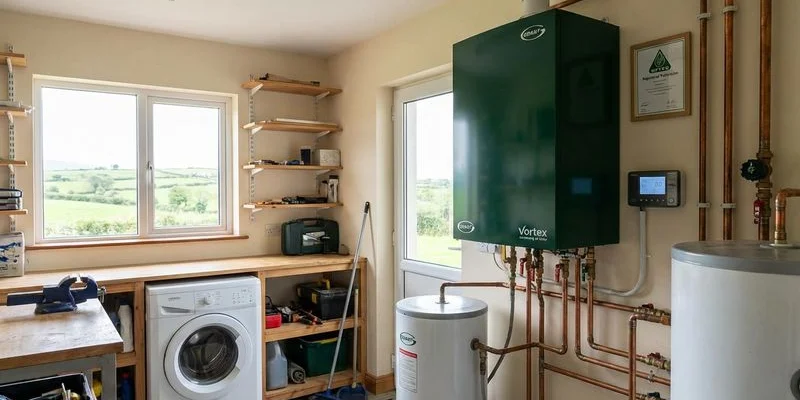
Running a heating system in the North West of Ireland comes with its own set of challenges. You know exactly how biting that Atlantic wind can get in January or February.
That specific chill makes the reliability of your central heating non-negotiable.
When you are looking at upgrading your boiler, the debate usually centers on Oil Boiler vs Gas Boiler: Which Is the Better Choice for Your Sligo Home?
We tackle this question almost every day.
Homeowners often feel stuck between sticking with what they know and switching to a potentially cheaper option.
Our goal here is to strip away the jargon and give you the clear facts based on what we see on the ground in Sligo.
Let’s look at the numbers, the local availability, and the practical realities of each fuel type.
The Sligo Context: Why Location Dictates Your Options
Geography is the first thing we check before making a recommendation.
County Sligo has a distinct split when it comes to infrastructure.
We find that the natural gas network, operated by Gas Networks Ireland, is excellent if you live within Sligo town, Strandhill, or specific pockets of Collooney and Ballisodare.
Residents in these areas often have the luxury of choice.
However, once you move towards Ballymote, Tubbercurry, Enniscrone, or the rural townlands, the picture changes completely.
The gas grid simply does not reach these areas.
In these locations, kerosene oil has been the standard for decades.
You essentially have two choices in these rural zones: stick with a modern oil system or undertake a deep retrofit for a heat pump.
Oil Boilers: The Pros and Cons
Oil remains the dominant heating source for rural Ireland for a reason.
Advantages of oil heating
- Universal Availability: You are not tied to a grid. A tanker can reach you whether you are in the middle of town or up a lane in the Ox Mountains.
- High Heat Output: Kerosene burns hotter than natural gas. For more details on oil boiler servicing, we can help maintain your system. We find this creates a “cozier” heat that works exceptionally well in older, stone-built Sligo farmhouses that might not have perfect insulation.
- Rate Shopping: You have the freedom to buy from different suppliers like Sweeney Oil, Top Oil, or local co-ops. This allows you to fill up when prices dip.
- HVO Compatibility: This is a major recent development. Many modern Grant Vortex boilers we install are now compatible with Hydrotreated Vegetable Oil (HVO), a renewable fuel that can reduce carbon emissions by up to 90% without changing your boiler.
Disadvantages of oil heating
- Theft Risk: This is an unfortunate reality in rural areas. We recommend installing a tank lock or a smart monitor like a Watchman Sonic to deter theft and alert you to sudden level drops.
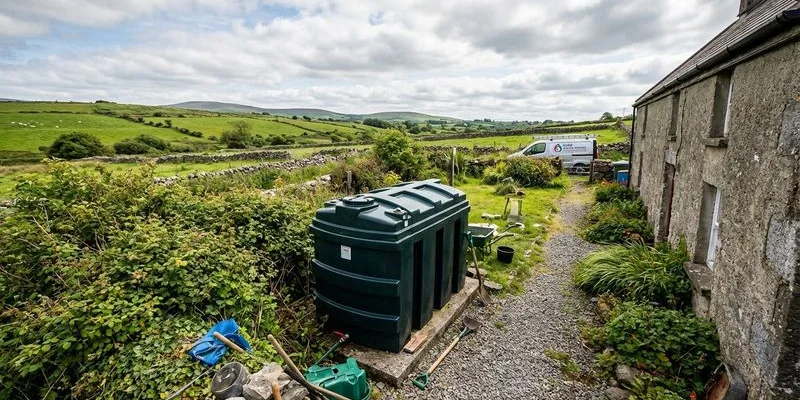
- Space Requirements: You must sacrifice garden space for a tank. A standard 1,000-litre tank needs a concrete base and clear access for delivery drivers.
- Cash Flow Impact: You have to pay for 500 or 1,000 litres upfront. A fill-up can cost between EUR 500 and EUR 900 in one go, rather than spreading the cost monthly.
- Maintenance Needs: Oil is a “dirty” fuel compared to gas. Soot buildup is common, meaning you cannot skip the annual service if you want to maintain efficiency.
Gas Boilers: The Pros and Cons
Natural gas is often seen as the more convenient sibling in the heating family.
Advantages of gas heating
- Instant Supply: You never have to worry about running dry on a Bank Holiday weekend. The fuel is piped directly into your home 24/7. Learn more about our gas boiler service.
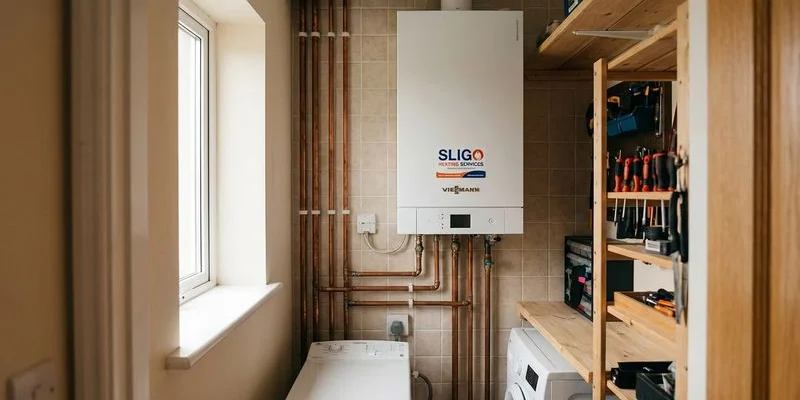
- Space Saving: This is a huge plus for smaller homes or apartments in Sligo town. Modern “combi” boilers remove the need for a hot water cylinder and a cold water tank in the attic, freeing up significant storage space.
- Smart Integration: Gas systems integrate seamlessly with smart controls like Hive or Nest. This allows you to control your heating from your phone, which can save you about 10-15% on usage.
- Cleaner Operation: Natural gas produces significantly less carbon and almost no particulate matter compared to oil.
Disadvantages of gas heating
- Standing Charges: You pay a fixed daily rate to be connected to the grid, regardless of whether you turn the heating on or not.
- Connection Fees: If your house is near a gas main but not connected, Gas Networks Ireland charges a connection fee. This typically starts around EUR 250 but can skyrocket if the distance from the road is significant.
- Carbon Tax Vulnerability: While both fuels are taxed, natural gas prices are heavily regulated and subject to carbon tax hikes that are applied automatically to your bill.
- Strict Zoning: If the pipe isn’t in your street, you cannot get it.
Running Cost Comparison (2025/2026 Estimates)
Prices have been volatile over the last two years.
The following figures reflect the current market conditions we are seeing in Ireland.
| Factor | Oil Boiler | Gas Boiler |
|---|---|---|
| Fuel Cost (Approx.) | 9-11 cent per kWh | 10-13 cent per kWh |
| Fill/Bill Structure | Large upfront payments (EUR 500+) | Monthly or bi-monthly bills |
| Annual Maintenance | EUR 120 - EUR 160 (Essential) | EUR 100 - EUR 140 |
| System Lifespan | 15 - 20 years | 12 - 15 years |
| Installation Cost | EUR 3,000 - EUR 5,000 | EUR 2,500 - EUR 4,000 |
| Future Proofing | HVO Biofuel ready | Biomethane ready |
A Note on Efficiency: Old non-condensing boilers often ran at 60-70% efficiency. New condensing models for both oil and gas must run at 90%+ efficiency by law (ErP Directive). Upgrading from an old boiler to a new one of either type usually cuts fuel usage by 20-30%.
Which Is Better for County Sligo Homes?
There is no single “best” answer, only the right answer for your specific property.
We break it down based on three common scenarios we encounter.
Scenario A: The Rural Detached Home
Verdict: Oil (or Heat Pump) If you are in a standalone property in Collooney or Grange, oil is likely your best bet for a direct replacement. It provides the high-temperature heat needed for existing radiators and draftier rooms. Switching to gas is likely impossible, and switching to a heat pump requires excellent insulation first.
Scenario B: The Town Terrace or Semi-D
Verdict: Gas If you live in a housing estate in Sligo town with a gas line on the street, gas is superior for convenience. The ability to reclaim your hot press (airing cupboard) space by removing the cylinder is a massive lifestyle upgrade for families.
Scenario C: The Renovation Project
Verdict: Heat Pump (with hesitation) If you are gutting a house, insulating the walls, and replacing floors, you should look at a heat pump. However, if you are only replacing the boiler and not improving insulation, stick to oil or gas. A heat pump in a poorly insulated house will cost a fortune to run.
SEAI Grants and Upgrades
We need to clarify a common misconception about grants.
The Sustainable Energy Authority of Ireland (SEAI) no longer offers grants for installing fossil fuel boilers.
You cannot get a grant solely to replace an old oil boiler with a new oil boiler.
However, you can get grants for the controls that make them efficient.
- Heating Controls Grant (up to EUR 700): This helps pay for upgrading your timers, zoning your heating (upstairs vs. downstairs), and adding smart thermostats.
- Technical Assessment: Before doing any major work, we recommend getting a BER assessment. This costs roughly EUR 150-200 but is often partially refundable if you proceed with grant-aided works.
Our Recommendation
The decision usually makes itself once you look at the gas map.
If you have natural gas available, the convenience and space-saving benefits usually win.
For everyone else in County Sligo, a modern “blue flame” oil boiler is a fantastic, reliable workhorse.
We strongly advise checking if your new oil boiler is HVO-ready.
This small check now ensures you can switch to renewable liquid fuel in the future without replacing the entire unit again.
Your heating system is the heart of your home during a Sligo winter.
It needs to be installed correctly to be safe and efficient.
At Emergency Plumber Sligo, we are registered experts in both systems.
We handle everything from the initial efficiency test to the final commissioning.
Call us on 087 341 0745 to discuss your heating history and what option makes the most sense for your budget.
Need a Plumber in Sligo?
Our team is available 24/7 for emergency and scheduled plumbing services across County Sligo.