Types of Heating Systems in Irish Homes: A Complete Guide
From oil-fired central heating to heat pumps, understand the different heating systems found in Irish homes and which might be right for you.
Ireland’s climate demands a reliable heating system. The cool, damp conditions prevail for much of the year. Winter temperatures regularly drop towards freezing.
Your heating system is one of the most important features of your home. We see the impact of poor heating choices every winter. Not all Irish homes are heated the same way.
The type of system in your home depends on when it was built and where it is located. Understanding your heating system helps you maintain it properly. It allows you to troubleshoot problems effectively. You can make informed decisions when it is time to upgrade.
Here is a comprehensive guide to the heating systems you will find in homes across Ireland. We have included specific references to what is common here in County Sligo.
Oil-Fired Central Heating
Oil central heating is the most common heating system in County Sligo and across rural Ireland. An oil-fired boiler heats water that is circulated through radiators via a network of copper or plastic pipes.
How It Works
We find that many homeowners understand the basics but miss the nuances of the process.
- Heating oil (Kerosene) is stored in an external tank, typically holding 1,000 to 1,200 litres.
- The boiler draws oil from the tank and atomises it through a nozzle before igniting it.
- This flame heats a heat exchanger which transfers heat to the circulating water.
- A pump circulates the hot water through your radiator circuit.
- A separate circuit or motorised valve directs heat to the hot water cylinder for taps and showers.
Types of Oil Boiler
Non-condensing (older): These operate at around 75-85% efficiency. You will still find them in many older Sligo homes. They are increasingly being replaced due to higher fuel consumption.
Condensing (modern): These achieve 90-95% efficiency by extracting additional heat from the flue gases. Current building regulations require all new oil boiler installations to be condensing models. We often install Irish-manufactured boilers like the Grant Vortex, which are designed for our specific climate.
Combi oil boiler: This unit heats water on demand without a separate cylinder. They are less common than gas combis but are available from manufacturers like Firebird and Grant.
Pro Tip: Modern oil boilers are now being manufactured as “HVO Ready.” This means they can be converted to run on Hydrotreated Vegetable Oil in the future. This renewable fuel could reduce carbon emissions by up to 90% compared to standard Kerosene.
Pros and Cons
- Availability: Works anywhere, so no gas network is needed.
- Output: High heat output is excellent for larger, older properties with high heat loss.
- Cost Volatility: Fuel prices fluctuate based on global oil markets.
- Storage: Requires an external tank and space in the garden.
- Emissions: Higher carbon footprint than gas or heat pumps.
Gas-Fired Central Heating
Natural gas central heating is common in urban areas where Gas Networks Ireland has infrastructure. In County Sligo, gas is available in Sligo town and some surrounding areas. Much of the county remains off the gas grid.
System Types
Regular (conventional) boiler: This works with a hot water cylinder and a cold water tank in the attic. We typically see this traditional setup in Irish homes built from the 1970s through the early 2000s.
Combi (combination) boiler: This unit heats water on demand so no cylinder or attic tank is needed. It is increasingly popular in apartments and smaller homes where space is limited.
System boiler: This is a hybrid that works with a hot water cylinder but does not need an attic tank. The pump and expansion vessel are built into the boiler. This makes the installation neater and quicker.
Important Safety Requirement
You must ensure that any work on a gas boiler is performed by a Registered Gas Installer (RGI). It is a legal requirement in Ireland. Our team always carries RGI identification to prove compliance with safety standards.
Pros and Cons
| Feature | Impact |
|---|---|
| Running Costs | Generally lower per kWh than electricity or oil. |
| Convenience | No fuel storage or ordering required; it is piped in. |
| Cleanliness | Burns cleaner than oil with less soot buildup. |
| Availability | Restricted to the gas network map. |
| Maintenance | Annual service by an RGI is critical for safety. |
Solid Fuel Heating
Solid fuel systems have a long history in Ireland. They are still found in many homes, particularly older rural properties in County Sligo. These use coal, turf (peat), wood, or smokeless fuel to generate heat.
Types of Solid Fuel Systems
Open fire with back boiler: This is a traditional fireplace with a water jacket behind it that heats a small amount of water. We warn customers that these are very inefficient, typically losing 60-70% of the heat up the chimney.
Enclosed stove with back boiler: This is a more efficient version where an enclosed stove heats water through a built-in boiler. These can be 60-80% efficient. They are popular for supplementing central heating during the coldest months.
Standalone solid fuel boiler: This is a dedicated boiler room appliance that burns coal, wood, or pellets to power the central heating system. They are more efficient than back boilers but require regular manual attention for stoking and ash removal.
Important Regulatory Changes
Ireland’s Solid Fuel Regulations (2022) have introduced a nationwide ban on the sale of smoky coal. The old “Low Smoke Zones” now effectively apply to the entire country.
Homeowners with solid fuel systems must be aware of these changes:
- Wood Moisture: Wood sold for heating must have a moisture content of 25% or less (wet wood causes chimney fires and pollution).
- EcoDesign 2022: New stoves must meet strict efficiency and emission standards known as EcoDesign.
- Turf Restrictions: While you can still cut turf for personal use, the commercial sale of turf is heavily restricted.
Heat Pumps
Heat pumps are the fastest-growing heating technology in Ireland. This growth is driven by climate targets, SEAI grants, and improving technology. They extract heat from the outside air or the ground and transfer it into your home.
Air-to-Water Heat Pumps
This is the most common type in Irish homes. An external unit extracts heat from the ambient air and uses it to heat water. This water is circulated through underfloor heating or low-temperature radiators.
Key considerations for Sligo homeowners:
- Insulation is Critical: Your home must be well-insulated to retain the low-flow heat.
- Technical Assessment: You must have a Technical Assessment carried out to ensure your home has a Heat Loss Indicator (HLI) of 2.0 Watts/K/m2 or less.
- Grants: SEAI grants for heat pumps generally range around €6,500 for the system itself, with additional grants for insulation upgrades.
- Performance: Sligo’s moderate winter temperatures (rarely below -5 degrees Celsius) are well-suited to air-source technology.
Ground-Source Heat Pumps
These use pipes buried in the garden to extract heat from the ground. The ground remains at a relatively stable 10-12 degrees Celsius year-round.
- Efficiency: They are more efficient than air-source models during cold snaps.
- Space: You require significant garden space for horizontal collectors or budget for drilling vertical boreholes.
- Suitability: We find these are best suited to rural properties with large gardens.
Electric Heating
Some Irish homes rely on electric heating. We see this primarily in apartments, smaller properties, and rental accommodation.
Storage Heaters
These use cheap night-rate electricity to heat ceramic bricks overnight. The bricks release the stored heat during the day.
The Modern Upgrade: Old storage heaters were difficult to control. We now recommend modern “High Heat Retention” storage heaters like the Dimplex Quantum. These hold heat up to 45% longer and offer digital controls to release heat only when you need it.
Electric Panel Heaters
These are direct-acting electric heaters that provide heat on demand. They are simple and cheap to install. However, they are the most expensive way to heat a home per unit of heat delivered.
Immersion Heater
This is not a whole-house heating system. It is an electric element in the hot water cylinder that provides backup hot water.
Insider Tip: If you have a smart meter, you can schedule your immersion to run during “off-peak” electricity windows. This simple change can save a significant amount on hot water costs during the summer.
Underfloor Heating
Underfloor heating (UFH) is increasingly popular in new builds and extensions across Ireland. It works with most boiler types and is particularly well-suited to heat pump systems.
Wet Underfloor Heating
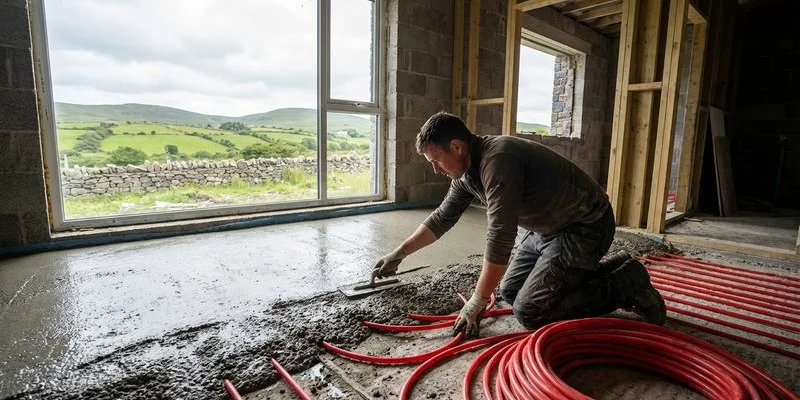
Warm water is circulated through pipes embedded in the floor screed. This provides gentle, even heat across the entire floor area.
- Efficiency: It runs at lower water temperatures (35-45°C) compared to radiators (60-75°C).
- Comfort: It eliminates cold spots and frees up wall space.
- Renovations: It is excellent for stone or tile floors, which are common in Sligo farmhouse renovations.
Electric Underfloor Heating
Electric heating mats or cables are laid beneath the floor covering. It is simpler to retrofit than wet UFH but more expensive to run. We usually recommend this only for small areas like bathrooms and en-suites.
Which System Is Right for Your Home?
The best heating system for your property depends on several factors. We have broken down the most suitable options based on property type below.
| Consideration | Best Options |
|---|---|
| Rural property, no gas available | Oil boiler (HVO ready) or Heat Pump |
| Urban property with gas | Gas Condensing Boiler or Heat Pump |
| New build (post-2019) | Air-to-Water Heat Pump with UFH |
| Older property, poor insulation | Oil or Gas Boiler (insulate first before considering heat pump) |
| Budget-conscious upgrade | Modern Condensing Boiler (oil or gas) |
| Long-term investment | Heat Pump (maximising SEAI grants) |
| Supplementary heating | EcoDesign Stove |
Need Advice on Your Heating System?
Whatever type of heating system you have in your Sligo home, proper maintenance is the key to reliable, efficient operation. At Emergency Plumber Sligo, we service, repair, and install oil and gas heating systems across County Sligo.
Our team can also advise on upgrades and help you understand your options. We have seen firsthand how the right system can transform a home’s comfort levels.
Call us on 087 341 0745 to discuss your heating needs or to book a service.
Need a Plumber in Sligo?
Our team is available 24/7 for emergency and scheduled plumbing services across County Sligo.