Why Are My Radiators Not Heating Up? Common Causes and Fixes
Cold radiators are frustrating. Learn the most common reasons radiators stop heating and what you can do before calling a heating engineer.
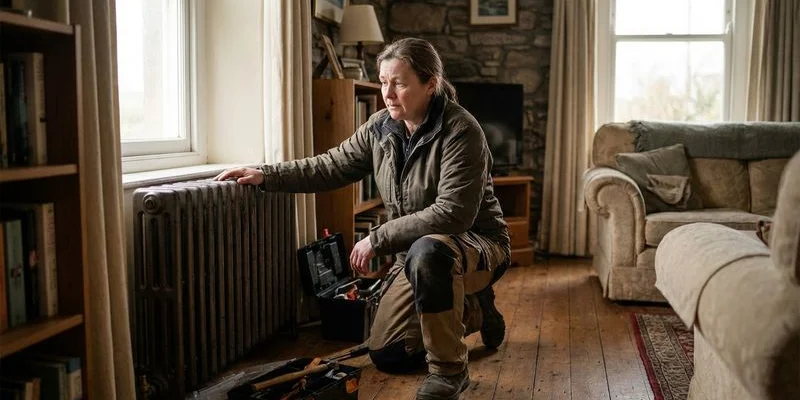
Few things are more frustrating than turning on your heating and finding that some or all of your radiators are not warming up. In County Sligo, where the damp Atlantic weather makes the heating season stretch from October well into April, cold radiators are not just an inconvenience. They can make your home genuinely uncomfortable and drive up your energy bills.
We see this issue constantly during the winter months.
The good news is that many radiator problems have straightforward causes. You can often fix them without calling a plumber if you know what to look for.
Here is a guide to the most common reasons your radiators might not be heating up, along with the practical steps we use to fix them.
Radiator Cold at the Top, Warm at the Bottom
This is the most common radiator complaint we encounter.
It almost always has a simple cause: trapped air.
Air enters your heating system through various routes, such as small leaks, recent water top-ups, or naturally over time as water reacts with metals inside the radiators. Since air is lighter than water, it rises to the top. This pocket of air prevents hot water from filling the full height of the radiator.
The bottom stays warm because the water is there, but the top remains stone cold.
The Fix: Bleed the Radiator
You can resolve this quickly with a radiator key. This simple tool is available at any hardware shop in Sligo for a couple of euros.
Follow this proven process to do it safely:
- Turn your heating on and let the system warm up so you can identify the problem spots.
- Identify which radiators have cold spots at the top.
- Turn the heating off entirely. This is a critical step many people miss. If the pump is running, it can suck more air into the system while you bleed it.
- Wait 10-15 minutes for the water to stop circulating and cool down slightly to prevent scalding.
- Place a cloth or small container beneath the bleed valve located at the top corner of the radiator.
- Use your radiator key to slowly open the bleed valve about a quarter turn anticlockwise.
- Listen for a hissing sound as the air escapes.
- Close the valve immediately once water starts to trickle out.
- Check the boiler pressure gauge. If it has dropped below 1.0 bar, top it up via the filling loop.
Pro Tip: Avoid cheap plastic radiator keys. They often snap inside tight valves. We recommend using a brass key for better leverage and durability.
Radiator Cold at the Bottom, Warm at the Top
This pattern indicates a completely different problem known as sludge build-up.
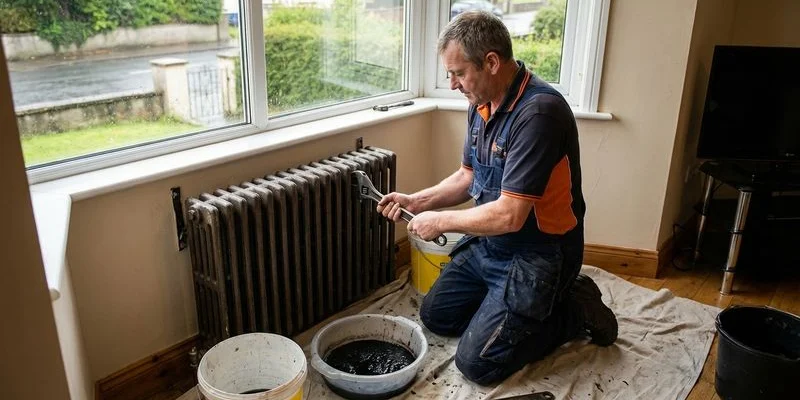
Over years of use, the water in your central heating system reacts with the steel in your radiators. This creates magnetite, a black, rust-like debris. Since this sludge is heavier than water, it settles in the bottom of your radiators and creates a thick blockage that hot water cannot penetrate.
This issue is a major efficiency killer.
According to industry data from the Carbon Trust, a sludge-filled system can increase your heating bills by up to 15% because your boiler has to work much harder to heat the house.
Identifying the Severity
We use the following comparison to help homeowners decide on the right solution:
| Issue Level | Symptoms | Recommended Fix |
|---|---|---|
| Mild | Small cold patch at the bottom center. | Chemical cleaner added to the system. |
| Moderate | Bottom third of radiator is cold; boiler is noisy. | Individual radiator flush (remove and clean). |
| Severe | Bottom half is cold; boiler cuts out frequently. | Professional Power Flush. |
The Fix Options
A radiator that is cold at the bottom due to sludge cannot be fixed by bleeding.
You have three main options depending on the severity:
- Remove and flush the individual radiator. You can take it off the wall, carry it outside, and flush it through with a garden hose until the water runs clear. Note that a standard garden hose flows at about 15-20 litres per minute, which removes loose debris but may not shift hardened sludge.
- Power flush the entire system. This is a professional treatment. We connect a high-velocity machine that pumps acid-based cleaning chemicals through your pipes at 50-80 litres per minute. This force dislodges sludge from all radiators, pipes, and the boiler heat exchanger.
- Add a magnetic filter. This device is fitted to the heating system pipework near the boiler. It captures magnetic sludge particles before they settle in radiators.
If several radiators have this problem, a full power flush is usually the most effective and cost-efficient solution in the long run.
One Radiator Not Working While Others Are Fine
If a single radiator refuses to heat up but the rest of the house is toasty, the issue is localised to that specific unit or its valves.
We suggest checking these three common culprits.
1. Stuck Thermostatic Radiator Valve (TRV)
The TRV is the valve with a numbered dial (usually 1-5) on the side of the radiator. Inside this head is a small metal pin that moves up and down to control water flow.
These pins often seize in the “closed” position during the summer months when the heating is off.
Quick Fix: Remove the plastic TRV head by unscrewing the silver collar or depressing the locking tab. You will see a small metal pin standing up.
Gently tap the side of the valve body with a wrench, or push the pin down with the flat side of a coin. It should spring back up. If it moves freely, refit the head. If it remains stuck down, the valve body likely needs replacing.
2. Closed Lockshield Valve
The lockshield valve is on the opposite side of the radiator from the TRV.
It is covered by a small plastic cap and is used to balance the system. If someone has closed it to paint behind the radiator or accidentally kicked it, the water flow stops.
Quick Fix: Remove the cap and use a pair of pliers to turn the spindle anticlockwise.
Turn it gently. A lockshield is sensitive, so even a quarter turn can make a massive difference. Open it slightly and wait 15 minutes to see if the pipe warms up.
3. Airlock in the Pipework
Sometimes air becomes trapped in the pipework feeding a specific radiator rather than the radiator itself.
This creates a blockage that the pump cannot push water through. While bleeding the radiator might help, you often need to close all other radiators in the house to force the full pump pressure to the problematic one to clear the airlock.
No Radiators Working at All
If none of your radiators are heating up, the problem lies with the central plant—your boiler or controls—rather than the radiators themselves.
You should perform these checks before calling for service.
Check the Boiler Status
- Is the boiler actually running? Verify that the power is on and the timer is set to “On” or “Auto.”
- Is it in “Summer Mode”? Many combi boilers have a “hot water only” setting (often indicated by a tap icon). Ensure the “radiator” icon is also selected.
- Has it locked out? Look for a fault code (like F1 or E1) on the digital display. You can usually reset the boiler by holding the reset button for 3-5 seconds.
Warning: If the boiler locks out again immediately after resetting, do not keep pressing the button. This indicates a safety fault that requires a professional.
Check the Thermostat
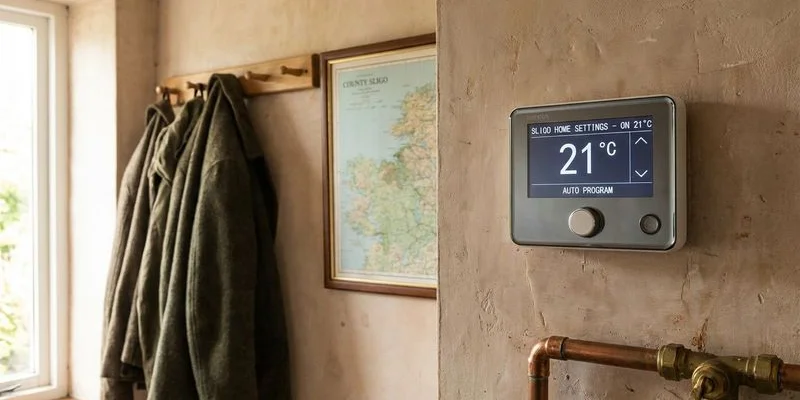
Modern wireless thermostats are a frequent source of “no heat” calls.
- Check the batteries. If the screen is blank or the battery icon is flashing, replace the AA batteries. A dead thermostat cannot tell the boiler to fire.
- Verify the target temperature. Ensure the thermostat is set higher than the current room temperature. You should see a “flame” symbol appear on the screen when it calls for heat.
- Assess the location. If your thermostat is in a room that gets direct sunlight or has a secondary heat source (like a fireplace), it will think the whole house is warm and shut off the boiler.
Check the Circulating Pump
The pump is the heart of your heating system. It pushes hot water from the boiler to the radiators.
If the pump fails, the boiler will fire up, reach temperature quickly, and then cut out because the water isn’t moving. The radiators will remain cold despite the boiler being on.
Signs of a failed pump:
- The boiler fires but pipes only get hot very close to the boiler.
- You cannot feel the pump vibrating (it should have a gentle hum).
- The boiler makes banging noises (kettling) and locks out.
Pump replacement involves electrical work and draining the system. It is strictly a job for a professional.
Check the Motorised Valves
Most Irish homes use a “system boiler” setup with a hot water cylinder.
Motorised zone valves direct the hot water to either your taps or your radiators. These valves contain a small motor that can burn out, or gears that can snap. If the heating valve fails in the closed position, the boiler will run, but no heat will reach your radiators.
A tell-tale sign is if you hear the valve motor clicking repeatedly or making a grinding noise.
Radiators in One Part of the House Are Cold
If your downstairs radiators are roasting but the upstairs ones are freezing (or vice versa), you are likely dealing with a flow or balancing issue. Understanding the different types of heating systems in Irish homes can help identify whether your system is designed for zone control.
Common causes include:
- A Failing Pump: The pump may have lost its torque. It has enough power to push water to nearby radiators but struggles to reach the furthest points of the system.
- A Faulty Zone Valve: In larger homes, upstairs and downstairs are often on separate “zones” controlled by different thermostats and valves. One zone may be working perfectly while the other has a failed component.
- An Unbalanced System: Water takes the path of least resistance. If the radiators closest to the boiler are fully open, they will “steal” all the hot water. The radiators further away are left starved of flow.
The Solution: System Balancing
Balancing involves adjusting the lockshield valve on every radiator to restrict flow to the hot radiators and force more water to the cold ones.
Professional heating engineers use digital thermometers to measure the temperature difference between the pipe entering the radiator and the pipe leaving it. We aim for a drop of roughly 12°C across the radiator to ensure the system is perfectly balanced and efficient.
When to Call a Professional
Bleeding radiators and checking thermostat batteries are great DIY tasks. However, some problems require the tools and expertise of a registered heating engineer.
You should contact a professional if:
- The boiler keeps losing pressure. This indicates a leak in the system, possibly under floorboards.
- You suspect a gas issue. If you smell gas or see a pilot light turning yellow instead of blue, shut the system off immediately.
- Sludge is severe. If bleeding doesn’t work and the water is pitch black, a power flush is necessary.
- Electrical components fail. Pumps, printed circuit boards (PCBs), and zone valves involve live electricity and water.
At Emergency Plumber Sligo, we diagnose and fix all types of radiator and central heating problems across the county. Whether it is a simple valve replacement, a power flush to remove sludge, or a full boiler repair, we have the experience to get your home warm again.
Call us on 087 341 0745 if your radiators are leaving you cold.
Need a Plumber in Sligo?
Our team is available 24/7 for emergency and scheduled plumbing services across County Sligo.